To go pro in competitive gaming, pick one game, climb its ranked ladder until you are near the very top, learn it deeply enough to win open tournaments, and get noticed by a team that pays you to compete. Getting signed is the hard part. Hundreds of thousands of players grind a title every year, and only a few hundred roster spots exist per game.
So how do you go pro in competitive gaming without wasting three years? The route is less mysterious than the internet makes it sound. Players in r/esports threads describe veteran schedules of 8 to 12 hours a day of ladder play and scrims, and the same threads are full of people who did exactly that and never got signed. Raw hours are the cheapest part of the job.
What separates the players who get picked up is game sense, consistency, team fit, and having a record scouts can actually look at. This guide walks that route stage by stage, including the parts nobody sells you: the dropout math, what to do while you are still learning, and what to do with a contract if one shows up.
Table of Contents
- What You Need
- Step-by-Step
- 1. Choose a competitive game and role
- 2. Reach consistent ranked performance
- 3. Build a deliberate practice routine
- 4. Improve the mental and physical side
- 5. Enter grassroots and online competitions
- 6. Find teammates, coaches, and mentors
- 7. Turn results into a professional opportunity
- 8. Create a realistic long-term plan
- Common Mistakes
- Frequently Asked Questions
- Is 30 too old to become a professional gamer?
- How many hours a day do professional players practise?
- Can I go pro while working or going to school?
- How do esports teams find and sign players?
- How do professional gamers make money?
- Do I have to stream to become a pro gamer?
- Conclusion
What You Need
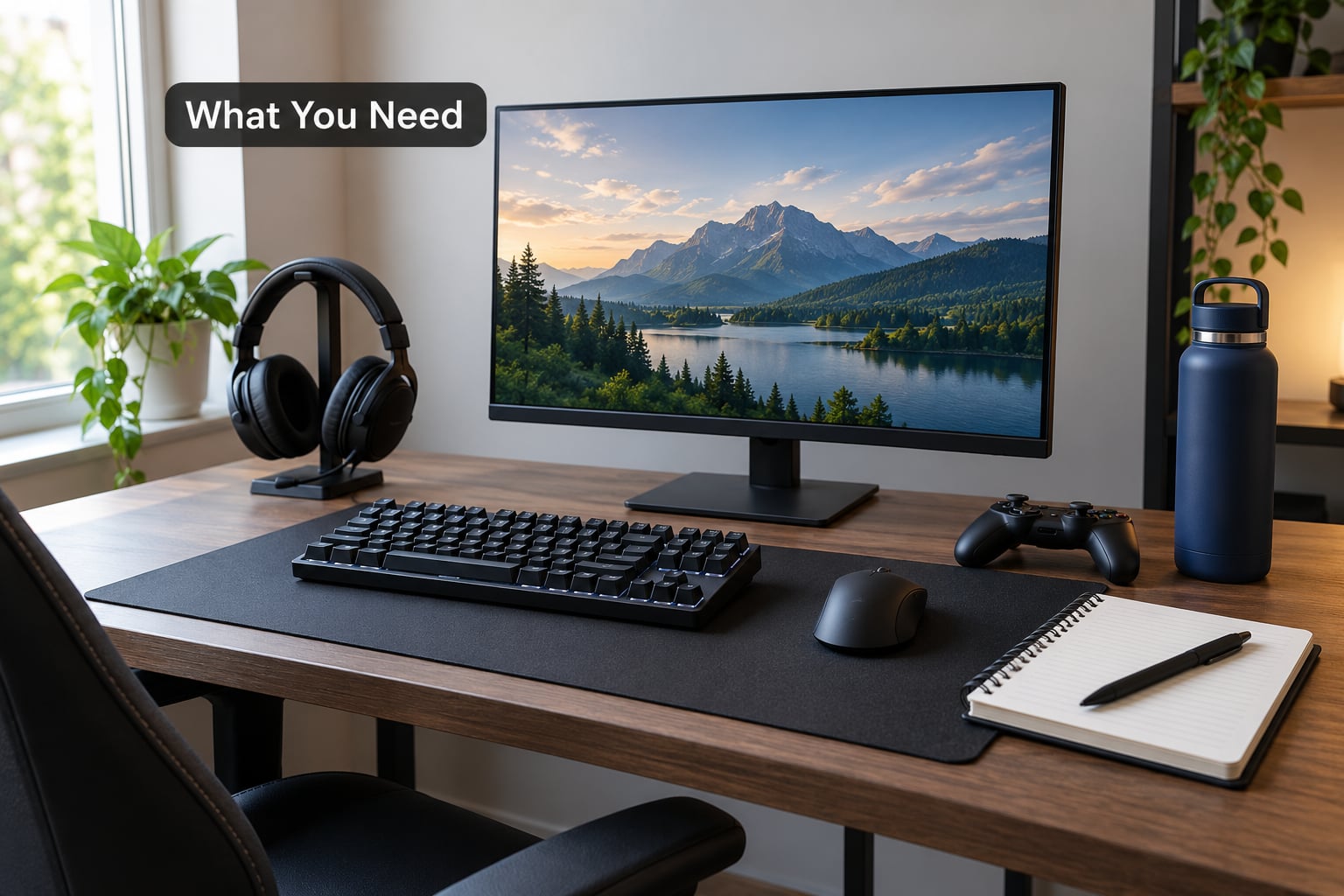
Before you worry about ladders and qualifiers, you need a few things in place. Skipping any of them slows everything downstream.
- A game with a real competitive scene. Pick a title that has ranked play, an open bracket circuit, and tournaments that run more than once a quarter. A game with an active scene has ranking systems, replay tools, coaches, and teams looking for players. A game without one has no ladder worth climbing.
- Equipment that stays the same. A monitor with a low response time, a mouse and keyboard or a controller you trust, a headset, and a connection that does not drop. Consistency matters more than spending. Changing your mouse or monitor every month resets your muscle memory and makes your progress look flat.
- Dedicated, protected hours. Four to eight focused hours a day is realistic alongside school or work. Professionals are usually in the 8 to 12 hour range. What matters is that the hours are blocked off and not stolen by chores, work shifts, or someone else’s plans.
- Access to competition. You need somewhere to play against people who are better than you. Ranked ladder, a team league, a weekly community cup, or an open qualifier. Solo queue in your usual mode teaches you habits, not pressure.
- A way to track and review your play. Every major game ships replays or a demo system. VOD review, meaning watching your own recorded matches, is the single highest-return habit in competitive play. Keep a notebook or a doc for recurring mistakes.
- Support and a fallback. Someone who is on your side when the results are bad, and a job, school place, or savings that keep your life stable while you chase this. Forum advice in r/esports is consistent on this point: do not quit your fallback to go pro.
Step-by-Step
1. Choose a competitive game and role
Choose the game you are genuinely willing to play for two years, then check whether its competitive scene can support a career. Four things decide it: how large the ranked population is at the top, how many roles the game offers, how many tournaments run per season, and how old the current professional players are. If a game has a deep, young scene with regular events, there is room for someone new. If the top of the ladder is entirely made of players in their late twenties and thirties, entry is much harder.
Compare the three archetypes concretely. A tactical shooter such as Counter-Strike 2 has a deep ladder and a well-documented pro pipeline, but the round-based structure means your impact depends on team play and calling, not solo highlights. A fighting game such as Street Fighter 6 is the opposite: a tiny field, an enormous skill ceiling, and almost everything decided in solo matches, which makes it the most accessible route to a signed player and the hardest to stay employed in. A team strategy game such as League of Legends or Dota 2 has the largest competitive audience and the most roles, but selection is slow because teams need specific positions filled.
Pick a role too. In a five-person game, decide early whether you want to carry, support, or flex, and practise that role instead of playing whatever is convenient. Scouts look for a role they need, not a generalist.
2. Reach consistent ranked performance
Set one measurable ranked target and a date, not a vague intention to get better. Write down the rank you want within eight weeks, then work backwards from what changed between your last twenty games and your best twenty games.
Learn the fundamentals before optimising. That means movement, positioning, and crosshair placement in a shooter; spacing, combos, and matchup knowledge in a fighting game; wave timing, map control, and objective setup in a strategy game. Then review your losses. Watch two or three of the matches where you lost and write down the same mistake every time. Fix that one thing, play another twenty, and check whether it shows up in your stats.
You are ready to move up when your rank holds for weeks instead of bouncing, and when you can explain your losses. Rank points are a rough proxy for skill, not the same thing.
3. Build a deliberate practice routine
Most people practise by queueing. Queueing measures you, it does not train you. Deliberate practice means you pick a weakness, work on it in a way you can measure, and stop when it stops improving.
A realistic week for someone aiming at semi-pro play looks closer to this than it does to eight hours of raw matchmaking:
| Block | Time | What it is for |
|---|---|---|
| Warm-up and aim or execution drills | 60 to 90 min | Raw mechanics, so the rest of the session is not wasted on untied hands |
| VOD review of your own matches | 90 min | Finding the recurring error and the round or fight where it cost you |
| Weak-point drilling | 60 min | Repetition on the specific thing you found in review |
| Scrims or team play | 2 to 3 hours | Comms, roles, and reading a real opponent instead of a lobby |
| Ranked or tournament play | 2 to 3 hours | Competitive pressure and results that scouts can see |
| Patch and meta reading | 30 min | Noticing when the game changes under you |
Keep one day light. Fatigue turns a good session into a wasted one, and a burned player stops improving within weeks.
4. Improve the mental and physical side
The difference between a good player and a pro player is usually decision-making under pressure, not speed. Work on four things.
Composure comes from exposure. Play matches where the outcome is on the line, and when you lose, give yourself two minutes before touching the next game. Write down what tilted you. Most players can name their own trigger after a few weeks of honest note-taking, and naming it is most of the fix.
Communication is a trainable skill. Call out what you see, keep it short, and do not tilt at teammates in comms. Teams drop players for attitude far more often than for a bad stat line.
Sleep and exercise are performance tools, not optional extras. Most top players in esports train eight to twelve hours a day, and none of them do that on five hours of sleep. A short workout and a full night of sleep will do more for your consistency than an extra two hours of queueing.
Ergonomics matter over years, not weeks. A desk height that is right on day one saves your wrists, neck, and eyes later. Take real breaks, roughly ten minutes each hour. Long unbroken sessions produce decline in the last hour, not improvement.
Watch for burnout signals: dread before a session, results that get worse while hours go up, sleeping badly, and irritability. When you notice two or three at once, take a week off rather than a week at full load. A week off costs you very little. A month of grinding while depleted costs you months.
5. Enter grassroots and online competitions
Ranked ladder is a filter, not a competition. Enter things that have brackets: weekly open cups, community tournaments, amateur leagues, and open qualifiers for larger events. These give you something ranked ladder cannot, a result in a leaderboard that scouts and team managers can read.
In a shooter or a team game, team-based open events are the usual entry point, because a good individual player with no team is rarely signable. Solo events such as fighting game majors and open circuit play, where you compete individually, are more direct routes for players who have no team.
Screen the organiser before you commit. Check that the event has a history, a published ruleset, a prize structure, and a public bracket from previous editions. Be cautious with anything that asks for entry money through a direct transfer to an individual, promises placement, or needs your account credentials. Reputable platforms handle entry, brackets, and payouts themselves.
Protect the account that matters. Use a separate account for unfamiliar third-party tools, never share your login, and turn on two-factor authentication before you start competing regularly.
6. Find teammates, coaches, and mentors
Most players improve fastest with a stable group of four or five they trust, not in solo queue. Team finder servers, the community Discord for your game, local leagues, and university esports programs are the normal places teams form.
When you approach a team or a manager, keep it short and specific. Something like: I play support, I am in the top one percent of the ladder this season, here are my last three tournament placements, and I would like to try out for your academy roster. I can scrim this week. That gives them a rank, evidence, availability, and a clear ask. A wall of text about how passionate you are gives them nothing.
Evaluate the team as carefully as they evaluate you. Ask who is paying, whether there is a contract, who manages the players, what the practice schedule looks like, and what happened to the last roster. A manager who cannot answer those questions plainly is a warning sign. Anyone promising a paid slot in exchange for a percentage of your future earnings without showing you paperwork is not someone to sign with.
A coach is worth paying for once you are past the fundamentals stage, but the first three months should be review, discipline, and team play with people slightly better than you. Mentors are cheaper: a retired or semi-pro player in your game’s community will usually give honest feedback for free if you show up with questions prepared.
7. Turn results into a professional opportunity
Make yourself readable. Keep a player profile with your handle, role, region, ranked peak, tournament placements, and a link to a clip folder or a stream. Team managers check a handful of names at a time, and they need something to look at in thirty seconds.
Record your results in a single place. A spreadsheet of tournament entries, placements, opponent, and score is enough. Games like this are patchy and event calendars shift, and a documented history is what separates a player with a real record from someone describing their rank from memory.
Streaming is a parallel path, not a prerequisite. It builds an audience, it can generate income, and it is genuinely useful for a team that values personality and content. It is also a trap for players trying to get better, because streaming is a second job on top of the first one. Pick one lane, not both at once.
Decide which route fits you. A team or academy gives you a salary, a schedule, coaching, and exposure, with less control over your own time. The independent and open-circuit route keeps you self-directed but usually means self-funding your travel, entry fees, and equipment, and waiting longer to be paid anything. Starting in a team and moving independent later is a common path; the reverse is harder.
8. Create a realistic long-term plan
Set milestones at three levels so you can tell whether you are moving or drifting. Daily: the number of focused hours, one VOD review session, sleep. Monthly: a ranked or tournament target, one competition entered, one relationship built. Yearly: a decision about specialising, a bigger competition, an academy tryout, or a change of direction.
Know your exit criteria before you are emotionally invested. Useful checkpoints: no rank improvement over three months despite a consistent review habit, no team offers after a year of open events, or results that keep getting worse rather than better. Taking a break is a legitimate outcome of this plan, not a failure of it.
Keep the adjacent careers in view the whole time. The same scene that produces players needs coaches, analysts, casters, tournament operations staff, content producers, community managers, and game testers. A person who spent two years in high-level competition has a better shot at those roles than someone outside the scene, and the skills transfer even when the playing does not.
Common Mistakes
Switching games constantly. Every switch resets your ranking, your muscle memory, and your contacts. Pick the game you will specialise in and give it a full competitive season before you judge it. The exception is a genuine structural problem, such as a shrinking prize pool with no events, not boredom in week three.
Ignoring fundamentals for advanced tricks. Movement, positioning, and decision-making decide more matches than any flick trick. When you lose, the boring explanation is usually the correct one.
Practising without reviewing. Hours without a review loop produce hours. Block ninety minutes after each session to watch your own VOD and name one thing to change. That single habit separates most improving players from most stuck ones.
Chasing rank too early. You can top the ladder by playing the one mode you are best at and staying there. Scouts watch recent tournament results and team play, not a lifetime peak rank. Move to open events as soon as you are reasonably stable, even if the rank is not your best yet.
Skipping sleep and breaks to get more hours. Extra hours on five hours of sleep produce worse play and a shorter career. Protect seven hours of sleep and real breaks. It is a performance decision, not a discipline lecture.
Accepting suspicious offers. Guaranteed placement, payment demanded up front, contract terms you cannot read, and money wired to an individual rather than a company are all reasons to walk away. Have someone competent read any contract before you sign it, especially around image rights, exclusivity, and term length.
Confusing online visibility with competitive ability. Followers, clips, and a good stream can attract offers, but they do not win matches. Teams that care about results will put you in a scrim and watch. Being good at one thing is not the same as being good at the job.
Frequently Asked Questions
Is 30 too old to become a professional gamer?
It depends on the game, more than on the number. Fighting games, Rocket League, and some strategy titles have pro players competing into their late twenties and thirties because the skill curve is long and the physical demands are lower. Shooters and team titles skew younger because reaction speed and stamina matter more and the player pool is enormous. At 30 the bigger problem is usually the ladder, not the calendar. You are competing against players with more time available. If your results are strong, age is a conversation, not a disqualification.
How many hours a day do professional players practise?
Veterans in competitive gaming communities describe 8 to 12 hours a day for players at the top, split between scrims, review, drilling, and tournament play. Below that level, 4 to 6 focused hours beats 8 scattered ones. The number that matters is not the total but how much of it includes review, because review is what converts practice into improvement. Track your weekly hours for a month and you will usually find that most of them are queueing rather than training.
Can I go pro while working or going to school?
Yes, and it is the more common route. Most people who reach a professional or semi-professional level did it while holding a job or finishing a qualification, because the odds of going full-time on an unsigned player are small enough that quitting first is a bad bet. Protect two or three fixed hours a day, compete in open events around work, and keep the income until a paid roster spot exists. The recurring advice in r/esports is blunt on this: keep the fallback until the contract arrives.
How do esports teams find and sign players?
Five routes do most of the work. Open qualifiers, where your username appears on a public leaderboard scouts watch. Open circuit events, where results are recorded and searchable. Academy tryouts, which most large organisations run and which usually require a recent VOD submission. Ranked cutoffs, where a team filters by rank in a specific region. And direct contact, where you send a profile and availability to a manager. Each route needs the same thing: a readable record of recent results.
How do professional gamers make money?
Four streams, in rough order of size. A team salary, which is predictable and only exists for signed players on paid rosters. Prize money, which is large at the top and unpredictable for everyone else, and concentrated in a handful of events per year. Sponsorships, usually tied to your results and public profile. And streaming or content revenue, which depends on audience size and is the only stream you can build without being signed. Do not budget a career around prize money alone.
Do I have to stream to become a pro gamer?
No. Streaming is one way to build a profile, and it helps if your results are good and your personality carries a stream. It is not a requirement, and for a lot of players it is a distraction. A clip folder, a spreadsheet of results, and a short written profile give a scout the same information in far less time. If you do stream, treat it as a separate job with its own hours, and do it after your training block, not instead of it.
Conclusion
Here is the whole plan in five lines. Choose one game with a live competitive scene and commit to a full season in it. Set a ranked target with a date, and review your own matches every week until the target holds. Enter one reputable open competition this month, then build a small stable group of teammates and a coach you can trust. Keep a written record of results, protect your sleep and your fallback, and let the competitive results come before the streaming.
Most players who never make it are not lacking talent. They are lacking a review habit, a scene to compete in, and a plan that survives the bad months. Fix those three things and the odds change. The rest is just showing up on the days it does not feel like it.