You improve recoil control by firing the same short burst again and again, correcting the climb as the shots land, and recording how tight the group stayed. Twenty focused minutes beats an hour of spraying a wall with no target, because the first version gives you numbers to compare next session.
This guide is about recoil control in video games. If you searched for shooting technique, this is not that page. Everything below works in CS2, Valorant, Apex Legends, Rainbow Six Siege, Insurgency and similar shooters, and it covers both mouse and keyboard and controller.
The seven drills below run in order. Each one has a target you either hit or miss, which is the whole reason it works: without a target, a practice session is just play.
Table of Contents
- What You Need to Practice Recoil Control
- Step-by-Step: Seven Drills for Recoil Control
- 1. Find Your Baseline Spray Pattern
- 2. How to Practice Recoil Control in Short Bursts
- 3. Learn the Recoil Reset
- 4. Control Horizontal and Vertical Climb
- 5. Track Targets While Managing Recoil
- 6. Build Speed Without Losing Control
- 7. Test Your Progress Weekly
- Common Mistakes
- Spraying Until the Magazine Is Empty
- Pulling the Mouse Down Too Far
- Changing Difficulty Every Few Seconds
- Ignoring the First Shot
- Frequently Asked Questions
- How long should I practice recoil control each day?
- Do I need an aim trainer, or is the in-game practice range enough?
- Does lowering my mouse sensitivity help with recoil control?
- How do I stop my spray drifting sideways?
- Is recoil control easier on a controller than on mouse and keyboard?
- Which game has the hardest recoil to control?
- Conclusion
What You Need to Practice Recoil Control
The equipment list is short, and most players already own all of it.
- One game or aim trainer. The practice range or workshop maps in your main game is enough to start. Kovaak’s, 3D Aim Trainer and Aim Lab are useful once the drills in step four feel comfortable.
- A mouse that doesn’t skip or double-click. Any recent mouse works. A worn one adds noise to every measurement you take.
- A quiet space and an hour of focus. Twenty minutes minimum, uninterrupted.
- A timer. A phone timer is fine. Unbounded practice is how sessions turn into an hour of one drill.
- Somewhere to write numbers down. Accuracy, burst length, recovery time. If you only keep score, keep score.
Pick one weapon to practise with for the first two weeks. Splitting attention across a rifle, a shotgun and a pistol means no drill ever gets deep enough to stick.
Step-by-Step: Seven Drills for Recoil Control
Warm up first with five minutes of unfocused play. Run a deathmatch, take a few duels, let your hands warm without thinking about kick. Then work the drills below in sequence, and only move to the next one once you can meet its target twice in a row.
1. Find Your Baseline Spray Pattern
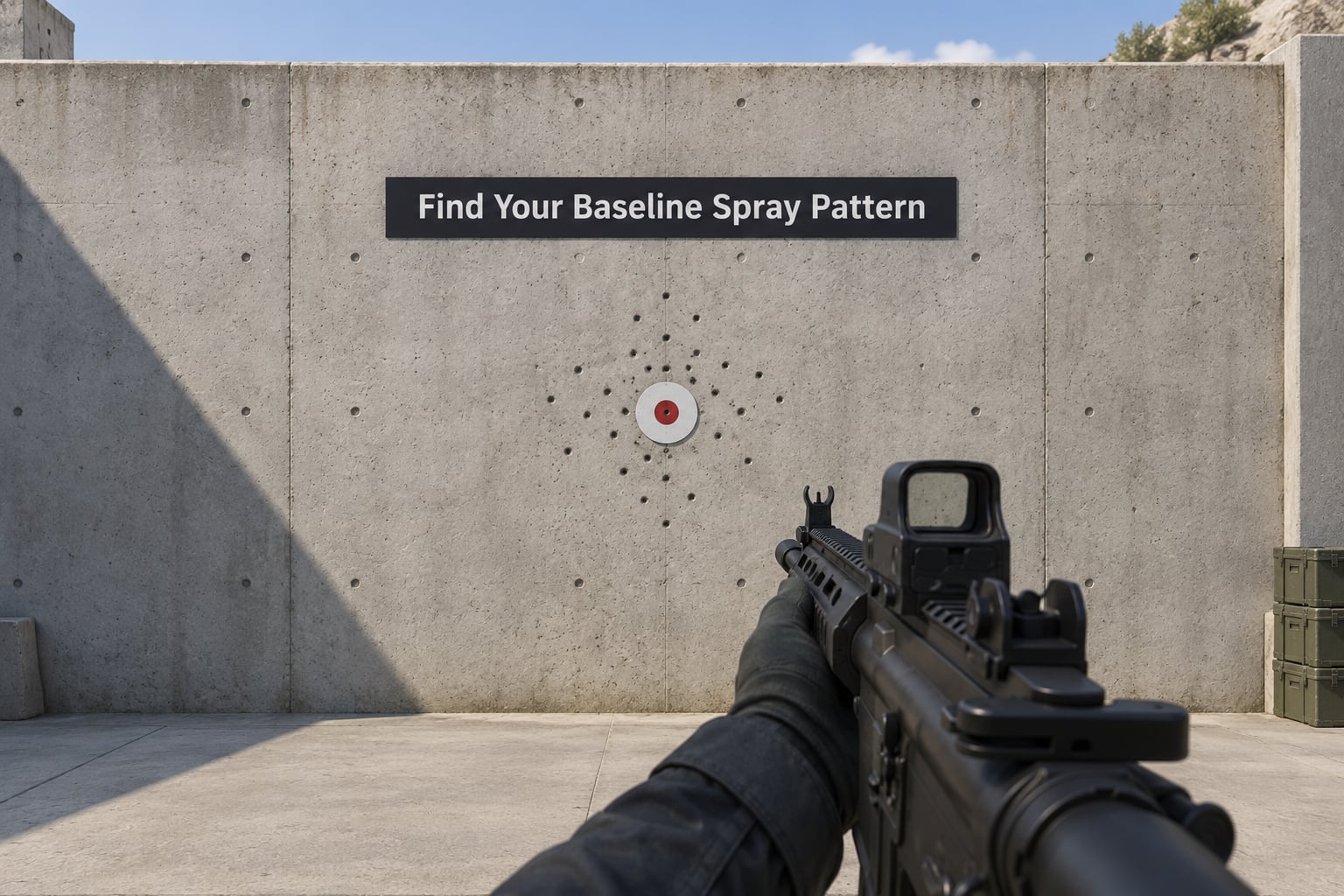
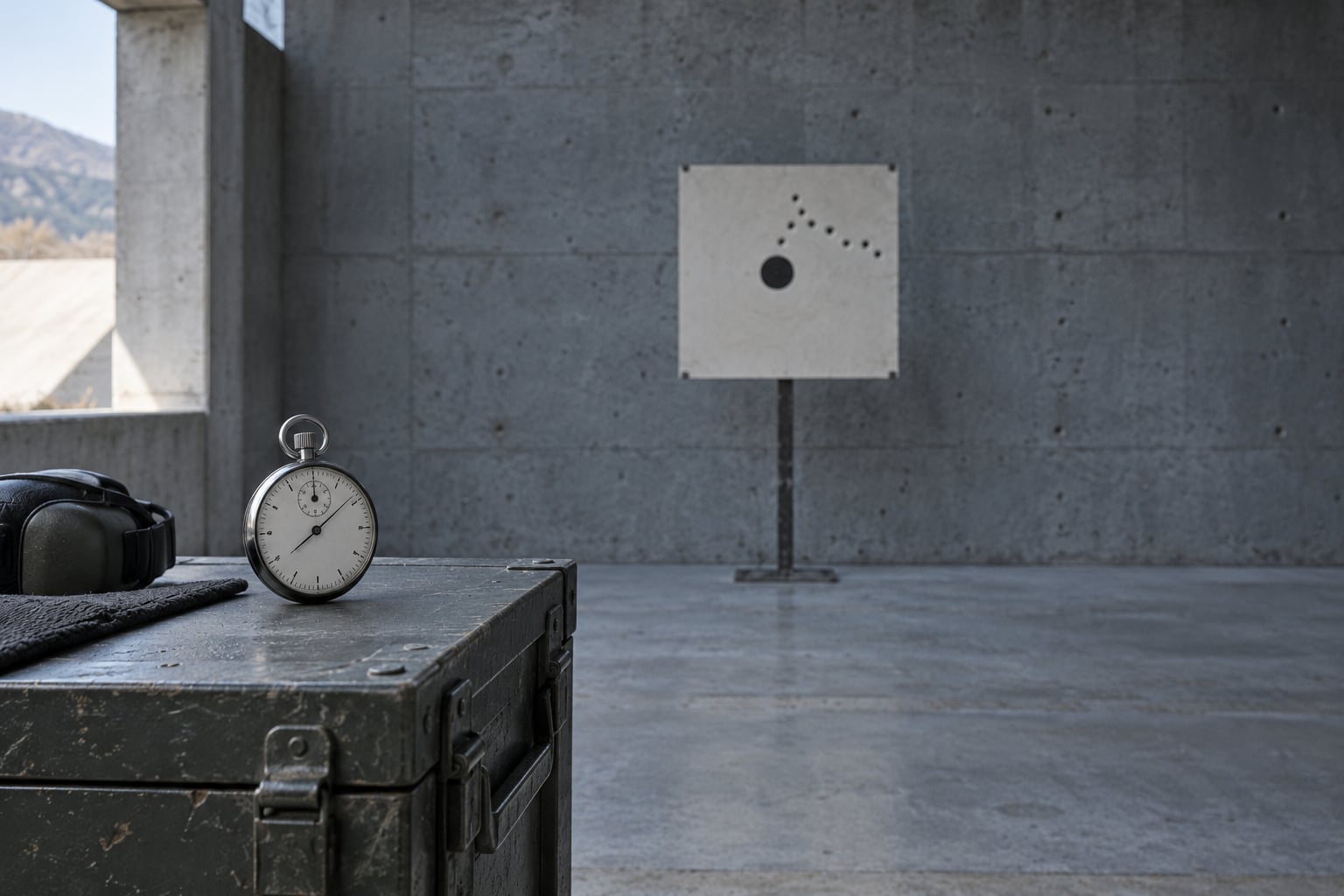
Start by finding out where your weapon actually kicks. Face a blank wall, fire a full magazine without touching the mouse, and watch where the bullets land. Most weapons climb first and then drift sideways, and the drift direction usually settles into a fixed path you can learn.
Now repeat it, this time correcting as you fire. Record three numbers: initial accuracy on the first five shots, how many bullets you can keep on target, and how long it takes before the group widens past what you could hit.
Your baseline is not a grade. It’s the line you compare against next week.
2. How to Practice Recoil Control in Short Bursts
Firing three to six rounds, stopping, and letting accuracy recover beats an empty magazine almost every time. Full sprays are for one specific situation, and assuming you need one on every duel is why your damage feels low even when you win.
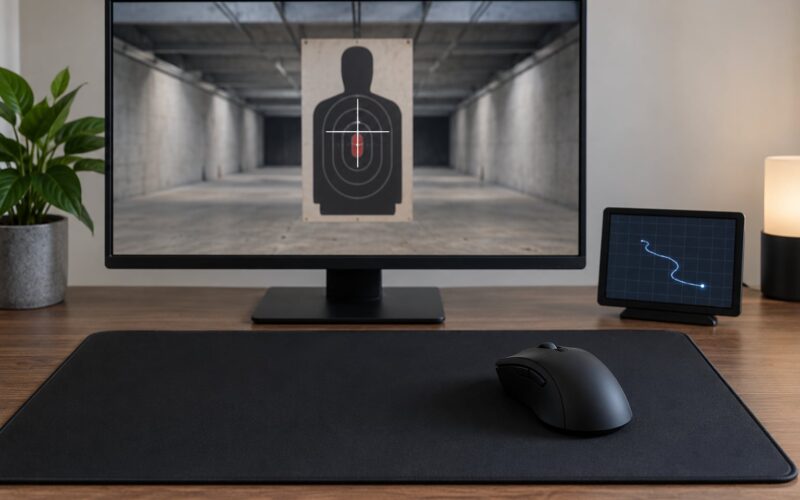
Run this drill: place a target at a fixed distance, fire a burst, release, reset your aim to the target, then fire again. Track your accuracy across ten bursts and count how many were clean. Your target is three to five clean bursts out of ten before you increase the burst length.
Resetting means putting the crosshair back on the target before the next burst, not holding it wherever the last shot pushed it. That single habit is where most of the improvement lives.
3. Learn the Recoil Reset
The reset is the pause between engagements: release fire, drop the aim slightly, and re-acquire the target before shooting again. Without it, your second burst starts from wherever the first one ended, which is usually too high and off to one side.
Drill it as an alternation. Fire a short burst, reset fully, fire again. Ten times through, then ten more with the burst length halved. If accuracy on the second burst drops noticeably, your reset is too fast or too small.
Slow resets look weird for the first day or two. That is the cost, and it goes away once your hands stop anticipating.
4. Control Horizontal and Vertical Climb
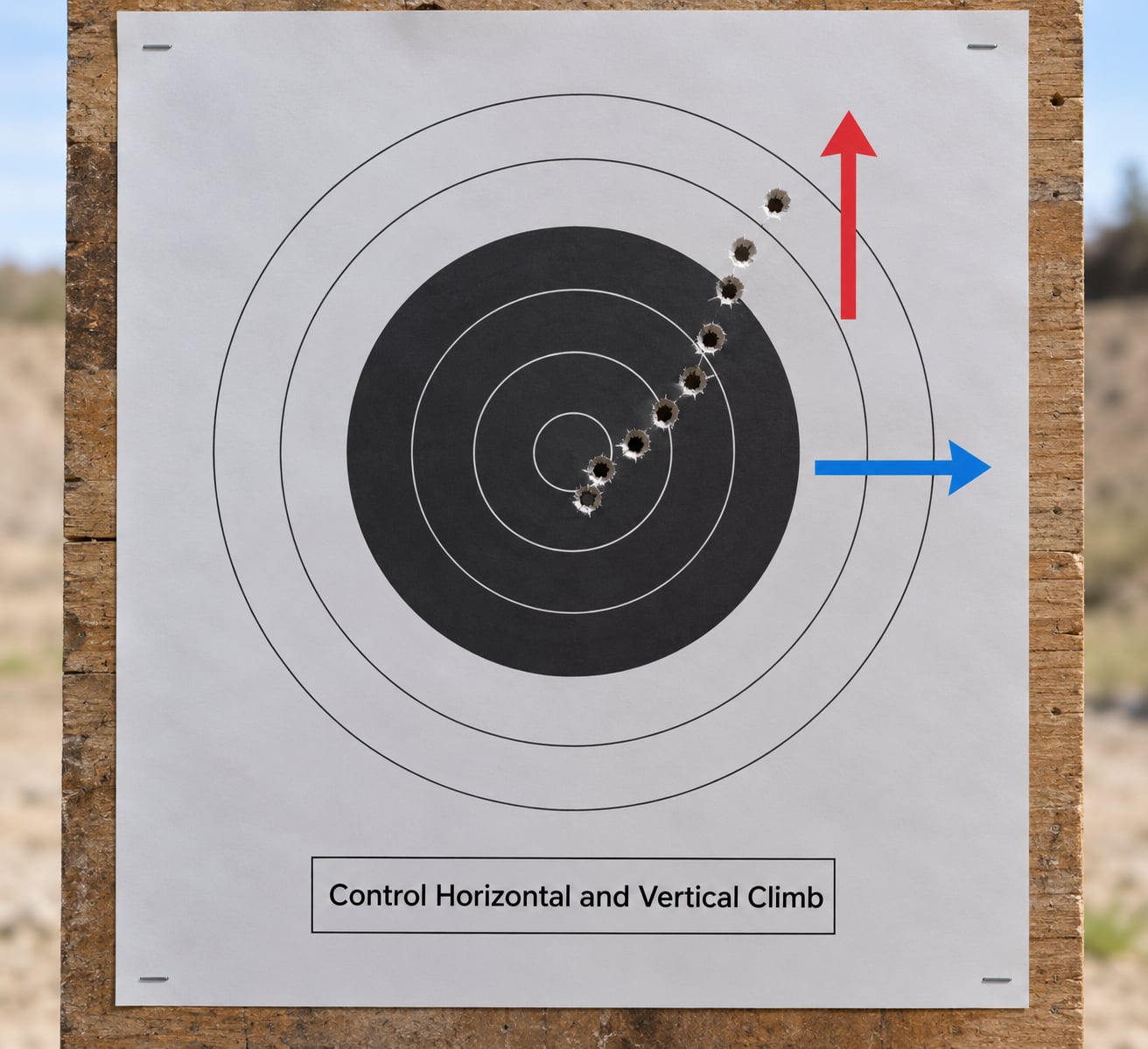
Vertical recoil is a pull. Horizontal recoil is a correction, and most players never practise it, which is why their sprays drift sideways into cover they never aimed at.
Break your practice into short repetitions of six to ten rounds rather than one long spray. Fire, watch which way the group drifted, correct, fire again. Your target is keeping the whole group inside the target’s outline at least four times in five repetitions.
Train vertical and horizontal separately for one session. Upward climb first until it feels boring, then sideways drift, which needs smaller movements and more attention.
5. Track Targets While Managing Recoil
Static walls teach the pattern, not the fight. Once your first two drills are solid, put the target in motion and keep the burst short.
Set a time limit, 90 seconds, and an accuracy floor. Strafing targets move left and right; stop firing whenever the crosshair loses them, then re-acquire and continue. Track accuracy, not speed, for the first few runs, because a fast run with a third of your bullets missing tells you nothing.
Your target is holding accuracy within a small margin of your stationary number while the target moves. Once you can do that, drop the time limit by ten seconds.
6. Build Speed Without Losing Control
Speed comes last, and only after accuracy holds at a slower pace. Pick a start position, a fixed weapon, and a target that respawns on a timer. Sprint or strafe into position, counter-strafe, and land an accurate burst before the target resets.
Run ten repetitions and record the time from movement start to the last hit, plus the number of rounds it took to kill. Your target is cutting the rounds-to-kill before you cut the time. A faster session that needs twice the bullets is a regression.
This drill is where most players find out their real problem isn’t recoil. Often it’s the movement before the first shot.
7. Test Your Progress Weekly
Set a weekly test with everything fixed: same weapon, same distance, same target, same burst length, same number of repetitions. Run it once on the day you start and once at the end of the week. Knowing how to practice recoil control with a fixed test is what turns sessions into progress you can actually see.
Compare four numbers: accuracy, hit rate, time to target, and consistency. Consistency matters most. A session with a great average and one terrible run usually means the drill is too hard, not that you’ve had a bad day.
Keep a short log. Two lines per week is enough, and the log is what separates a practice habit from a practice session that happened once.
Common Mistakes
Spraying Until the Magazine Is Empty
Long sprays throw your aim away and train panic, because the correction stops being deliberate. Fire three to six rounds, stop, reset, shoot again. Treat a full magazine as a deliberate choice made at long range against a target you can see clearly.
Pulling the Mouse Down Too Far
Overshooting downward feels powerful and lands your next burst in the floor. Make smaller corrections than you think you need and check where the group sits, not where your hand went. If your burst lands low, reduce the pull by a fraction rather than adding more.
Changing Difficulty Every Few Seconds
Switching distance, weapon or burst length resets your measurement, and you end up with no data at all. Hold one setting until you meet its target, then change one thing. Jump straight to ranked and the improvement will be slow but real, which beats fast and unmeasurable.
Ignoring the First Shot
Recoil control starts with placement, not compensation. A centred first bullet that lands clean does more than a three-shot spray that started off target. Stop at three bullets during warmup and confirm where that first bullet goes before adding rounds.
Frequently Asked Questions
How long should I practice recoil control each day?
Ten to twenty focused minutes is enough for most players, and consistency beats length. Short daily sessions build the correction faster than one long weekly grind, because the movement is small and repetitive. Keep the same drill, distance and weapon each time so your numbers stay comparable. Stop when accuracy starts sliding; a tired session teaches you to spray badly.
Do I need an aim trainer, or is the in-game practice range enough?
The in-game range is enough for the first four weeks. It has the real weapon, the real pattern and the real crosshair, which is what you need to build the correction. An aim trainer like Kovaak’s, 3D Aim Trainer or Aim Lab adds value once you move to tracking and speed work. Use it for drills five and six, not for learning the pattern.
Does lowering my mouse sensitivity help with recoil control?
A lower sensitivity makes the correction smaller and easier to control, and it is the change most players feel first. But match your desk and arm position before you change anything, because a sens that feels right in a shop will not feel right at home. Set it once, leave it alone for a month, and change it only when your desk space or mousepad changes.
How do I stop my spray drifting sideways?
Practise horizontal recoil on its own rather than as part of a full spray. Fire six to ten rounds, note which way the group drifted, and correct on the next repetition with a smaller movement than you expect. Keep the target at one distance while you do this. Once the drift stays inside the outline four times in five, bring the target back into motion.
Is recoil control easier on a controller than on mouse and keyboard?
No. Controllers make it easier to keep bullets on target, but the sideways drift is less predictable, so the correction is a constant small adjustment rather than a learned path. Practice the same drills with short deliberate thumbstick pulls instead of large smooth motions. Wall stacking still works on a pad, and it is still the fastest way to see whether you are improving.
Which game has the hardest recoil to control?
It depends on whether the pattern is fixed or random, not on the title. Games with a fixed spray pattern, like CS2 and Insurgency, can be learned until the correction is automatic. Games with random recoil resist memorising and reward short bursts and resets instead. Pick the game you actually play and drill its pattern, rather than comparing difficulty across titles.
Conclusion
Start with the baseline, then work drills two and three until short bursts and clean resets stop feeling like a decision. Keep a two-line log for a week, run the fixed test on the same weapon and distance, and only then make the drills harder. Your aim changes when you stop measuring, and it changes quickly when you don’t.