Peeking is the act of exposing part of your player model from behind cover to enter an opponent’s line of sight, and in a low time-to-kill shooter the player who is seen first usually fires first. You improve it by pre-aiming the angle, standing off the wall, swinging out with a varied rhythm, counter-strafing to a full stop, and resetting immediately after the exchange. Ten focused minutes a day beats a weekend of aim maps, and the whole thing takes a week of deliberate reps to feel different in a match.
Most players who think they have an aim problem do not. Advanced players on r/FPSAimTrainer describe the same thing over and over: their flick accuracy and tracking are fine, and they still lose the duel because they entered a pre-aimed angle, hugged the wall they were swinging, or re-peeked the exact same spot at the exact same speed. That is a habit problem, and habits are trainable.
What follows is the routine I use to fix it. Seven steps in order, and the last one has nothing to do with shooting.
Table of Contents
- What You Need
- How to Improve Peeking in Tactical Shooters: Step by Step
- Crosshair Placement: Improve Your Peeking Before You Move
- Create a Stable Shoulder-to-Swing Routine
- Vary Your Timing and Movement
- Use Audio and Information to Reduce Risk
- Practice the First Ten Seconds of a Round
- Review Deaths Instead of Chasing Frags
- Apply the Routine in Real Matches
- Common Mistakes
- Frequently Asked Questions
- How do I get better at peeking in VALORANT?
- What is a jiggle peek?
- What is the difference between a wide swing and a jiggle peek?
- Why do I get one-tapped every time I peek?
- What is an off-angle and how do I use one?
- How long does it take to improve peeking?
- Conclusion
What You Need
You need a place to fail repeatedly without a teammate watching, and twenty minutes that you will actually spend. That is the whole list. Everything else is optional.
A private match, a custom game lobby with bots, or a training range will do. Bots that walk into angles on a predictable loop are not realistic, but they are enough to rehearse the movement pattern, which is the part that needs the reps. For aim, a private match with a friend who will sit in the same spot and trade shots on your call is better than anything else.
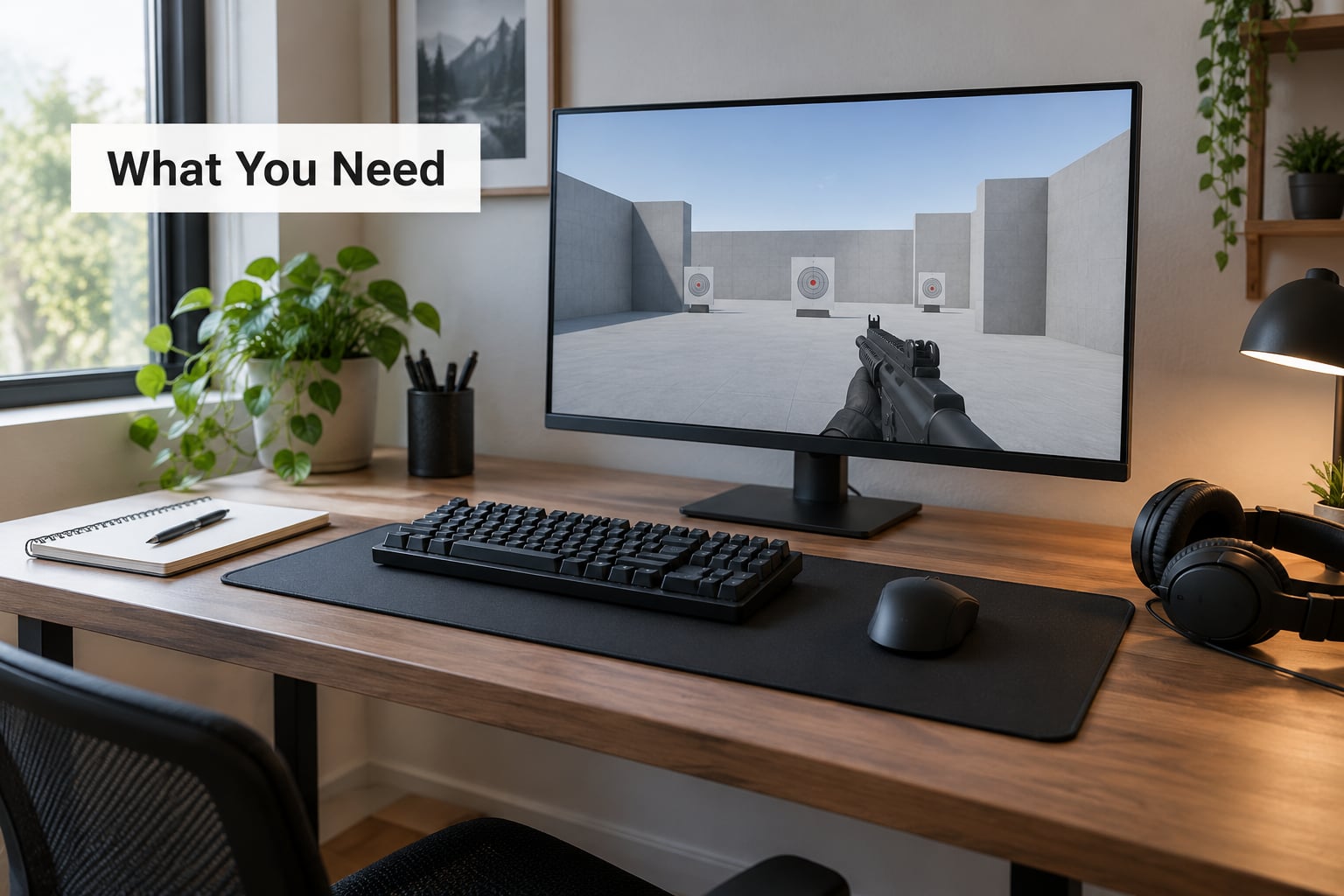
Spend ten minutes on settings before you start, then stop fiddling.
- Sensitivity: pick a value you can hit without thinking, and do not change it for two weeks. Muscles need time to rebuild, and switching mid-drill means you are training the setting, not the peek.
- Audio: turn it up. Footsteps, ability cues and reload tells are the cheapest information in the game, and most players leave a third of what they are hearing switched off.
- Crosshair: a small crosshair at head height for rifles and pistols. A wide crosshair suits a close-range automatic weapon where you expect to spray, a tight one suits a sniper you are pre-aiming with.
- Video settings: do not touch these mid-session. Frame rate matters for consistency, but consistency is what you are building right now.
You also need a way to look at your mistakes without turning the review into a rabbit hole. The cheapest version is a notebook beside the keyboard: one line per death worth remembering, with the map and the reason. Five lines a session is enough, and writing them is what stops a bad habit from staying invisible.
How to Improve Peeking in Tactical Shooters: Step by Step
Seven steps, in order. Most players only ever do the third one, which is the entire reason they get pre-fired.
Crosshair Placement: Improve Your Peeking Before You Move
Hold your crosshair on the height of the head you expect to clear, angled toward the corner you are about to swing, before you move a single key. The moment your feet start moving, your crosshair should already be pointing at the spot the enemy has to stand in.
Two rules keep this honest. First, pre-aim the first angle of a space, not every angle, because a crosshair locked to one spot is a crosshair that is wrong everywhere else. Second, when the pre-aimed angle is empty, do not freeze. Sweep smoothly to the next likely position at the same head height rather than jumping between two pixels.
You know it is working when a duel ends with your first bullet already in flight. That is passive aim: the enemy did the aiming for you.
Create a Stable Shoulder-to-Swing Routine
Break every peek into the same five beats so your hands do the work while your brain handles information.
- Position. Stand roughly a shoulder-width off the wall, not against it. Any closer and your model is visible first.
- Clear. Pre-aim the height and the angle. This happens at the wall, before exposure.
- Move out. Swing on a smooth diagonal so the enemy sees your shoulder before your centre, and your centre before your back.
- Correct. Counter-strafe into a full stop before firing, and aim slightly upward so the first shot lands head-high or above.
- Reset. Fire two or three bullets, take the information you got, and go back to cover. Live long enough to learn is not the goal.
The routine feels controlled when you can do it without watching your own hands. If you are consciously counting beats, keep practising until you are not.
Vary Your Timing and Movement
If you swing at the same speed with the same rhythm, you are training your opponent, not yourself. Mix three approaches: a slow shoulder jiggle that shows a sliver of model and pulls information, a timed wide swing that takes the angle decisively, and a wide swing with a variable delay that lands somewhere between the two.
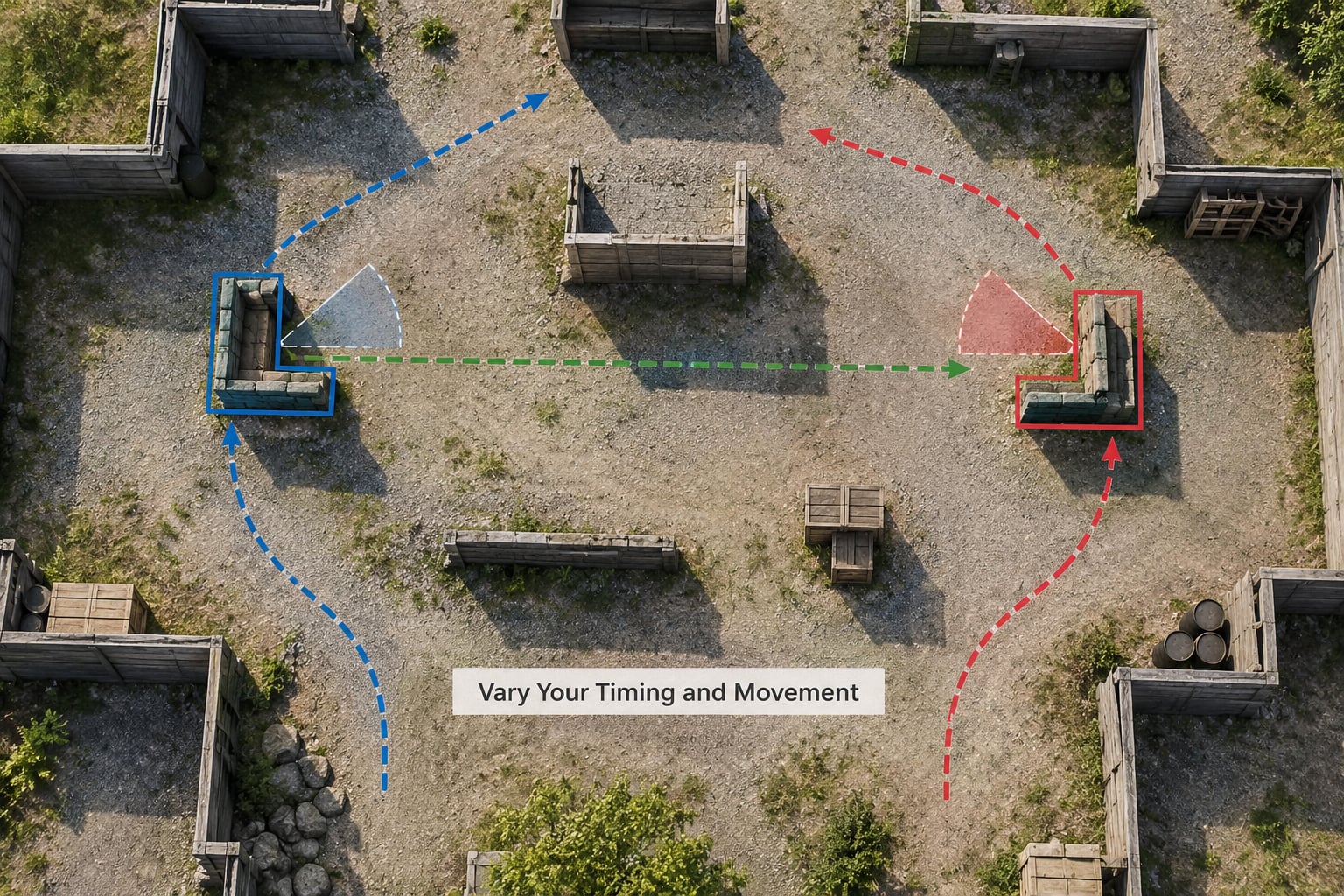
Random flick shots are a different thing entirely, and they are not what this means. Variation is about when and from where you commit, not about throwing your aim away once you have moved.
| Peek type | Risk | Use it when | Common mistake |
|---|---|---|---|
| Shoulder jiggle | Low | You need information before committing, or you are checking a second angle mid-clear | Jiggling forever until you have revealed yourself with no benefit |
| Wide swing | High | You have utility, a teammate trade, or the information to take the angle now | Swinging with no plan and dying to the first bullet |
| Timed wide swing | Medium | You are confident about the hold but want to beat a pre-aim | Using the same delay every round, which is the same as no delay |
| Off-angle hold | Low | You are defending and the obvious angle is already pre-aimed by the attacker | Holding an off-angle the whole round and drifting out of position |
| Double-peek | Medium | You have a partner on your crosshair side who swings on your contact | Two people peeking the same angle instead of two different ones |
On the other side, an off-angle is a position the attacker does not expect because it is not the normal head-height, straight-line view of the corner. Elevation, a pixel angle, or a head glitch are all variations of it, and all of them punish a swing that was timed to the wrong spot.
Use Audio and Information to Reduce Risk
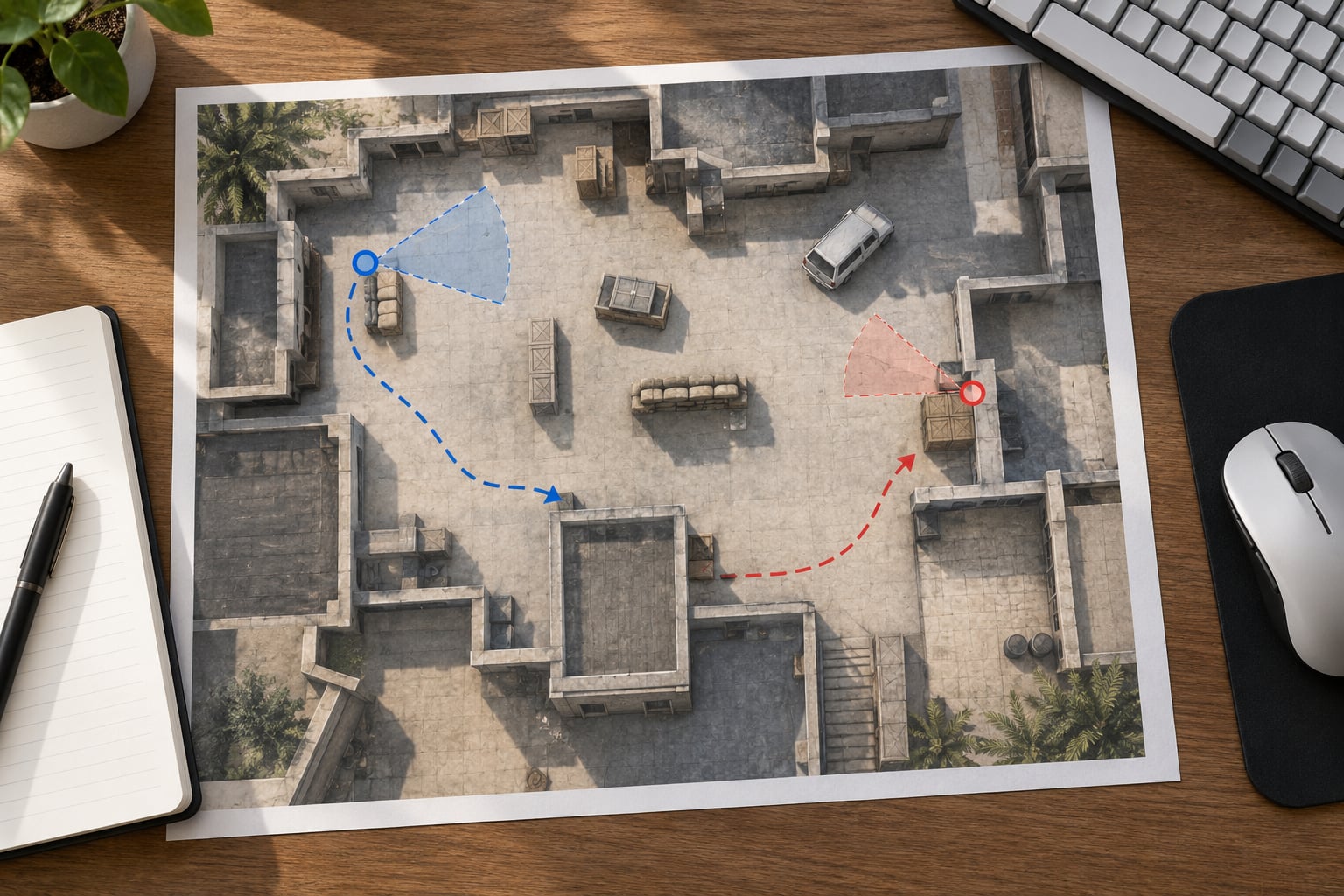
The best peek is the one you do not have to take. Before you commit, gather what you can: a teammate call, a minimap read, a reload sound, ability audio. Then decide whether silence means the space is safe or means you have heard nothing useful.
Sometimes silence is a reason to wait, and sometimes it is a reason to move. The useful habit is naming which one you are doing before you swing, because most bad peeks are a coin flip that the player never acknowledged.
Utility changes the maths. A flash or a smoke that cuts a sightline turns a high-risk wide swing into a normal one. Peeking through utility is not a substitute for the routine; it is the reason the routine works that day.
Practice the First Ten Seconds of a Round
Warm up on the easiest thing you will face all session, because the first ten seconds of a round is where habits form.
- Minute one to three: bots or a range, crosshair at head height, no shooting unless the angle is taken cleanly.
- Minute four to six: pre-aimed wide swings only. Every swing gets the same five beats.
- Minute seven to eight: add one jiggle for information before each wide swing.
- Minute nine to ten: mix all three, and deliberately vary the delay.
You are looking for one number, not a stat screen. Count how many of your swings ended in a trade or a clean reset, and write it down. Most sessions sit in the low thirties as a percentage. Two weeks of this is where it starts moving.
Review Deaths Instead of Chasing Frags
Scoreboard says nothing useful. Watch the two seconds before each death and pick the first decision that was wrong, not the shot that missed.
- Crosshair was on the floor or the wall when you stepped out? Placement problem.
- You were still moving when the first bullet landed? Counter-strafe problem.
- You were already visible before you moved? Wall distance problem.
- You re-peeked the same spot on the same beat and got pre-fired? Cadence problem.
- Everything above was fine and you still lost? The angle was simply not yours to take, and the decision was the problem.
That last one is the one nobody wants to hear. Plenty of duels are lost correctly, and treating them as aim failures keeps you drilling the wrong thing.
Apply the Routine in Real Matches
Set one cue before each engagement and hold to it. Mine is a breath: I set it at the corner, I take the angle on the exhale. Anything consistent works, as long as it is short enough to survive pressure.
Then adjust for what the round is actually giving you. Different weapon, different range, different peek priority. An Operator wants a slow, wide, pre-aimed swing at head height. A close-range automatic wants a fast swing and an immediate counter-strafe. On defence, your peek is a reposition, not a duel.
Common Mistakes
These are the habits that lose more duels than raw accuracy does, and each one has a specific correction.
| What you do | What the enemy sees | The fix |
|---|---|---|
| Hug the wall you are peeking | Your model before you can see anything | Step back to roughly shoulder width, then swing on a diagonal |
| Shoulder-peek on the same rhythm every time | A model appearing at a fixed interval, already pre-aimed | Vary the delay and the approach line, even slightly |
| Move before clearing the angle | Nothing yet, which is worse, because you have shown your intention | Pre-aim the height and corner at the wall before you step |
| Stay out after winning the duel | A stationary target at known range, spraying at nothing | Reset after two or three bullets, take the information, come back |
| Peek with no plan during a site clear | Two angles at once and no way to win either | Pick the angle, take it, reset, then take the next |
| Lock the crosshair to one pixel angle | Nothing, right up until you meet the enemy somewhere else | Pre-aim the first angle, then sweep smoothly at the same height |
| Confuse aggression with timing | The same player model entering the same lane faster each round | Decide before the swing, then commit or reset, not both |
A note on the empty angle, because it is the most common follow-up: if your pre-aim was right and the space is empty, you have learned something. Push it, use the utility, or fall back. Standing there re-checking the same corner is how a good peek turns into a death.
Frequently Asked Questions
How do I get better at peeking in VALORANT?
Drill the five beats in order: position a shoulder-width off the wall, pre-aim head height, swing on a diagonal, counter-strafe to a full stop, fire two or three bullets and reset. Ten minutes a day in a private match, counting how many swings end in a trade or a clean reset, moves faster than hours of aim maps because the reps go to the habit rather than the flick.
What is a jiggle peek?
A jiggle peek is a small, controlled exposure where you lean or step just far enough out of cover to show a sliver of your player model, gather information, and pull straight back in. It is the low-risk option for checking a second angle or baiting a reaction before a wider commit. The mistake is jiggling repeatedly until you have revealed yourself for nothing.
What is the difference between a wide swing and a jiggle peek?
A jiggle peek exposes a small amount of your model for a fraction of a second and takes almost no risk. A wide swing moves your whole body out on a diagonal to take the angle decisively, showing your shoulder, then your centre, then the rest. Jiggle for information, swing when you already have the information and the utility to survive the trade.
Why do I get one-tapped every time I peek?
Almost always one of four things: you are pre-aimed, you are too close to the wall so your model appears first, you are still moving when the first bullet lands, or you re-peek the same angle on the same beat. The first three are fixed with position, pre-aim and counter-strafing. The fourth is fixed by varying your delay and your approach line every time.
What is an off-angle and how do I use one?
An off-angle is a position the opponent is not expecting because it is not the normal straight-line view of a corner, usually taken from elevation, a pixel angle or a head glitch. Use it on defence, where it punishes a swing timed to the normal angle, and re-check your position every few seconds so a silent rotate does not catch you in it.
How long does it take to improve peeking?
Most players feel a difference in one to two weeks of ten focused minutes a day, because the routine is mechanical rather than perceptual. The duel-win trend usually takes closer to a month, and the giveaway is not more kills, it is surviving peeks that used to one-tap you. Judge it on trades and clean resets rather than frags.
Conclusion
Pick one map, practise the position-pre-aim-swing-counter-strafe-reset sequence for ten minutes, and write down one line about your next death before you look at any score. That single routine, repeated for two weeks, is the whole answer to how to improve peeking in tactical shooters. Make it more complicated only once the simple version stops costing you the same duels.
Sharper crosshair habits and general aim work compound nicely, but neither will fix a peek that arrives on a metronome. Change the habit first, and let the aim catch up.