A typical esports pro practice day runs about six to eight hours of structured team training, plus two to four more hours of self-directed work like aim drills, solo queue, and VOD review. Add meals, exercise, contractual streaming hours, and a protected sleep block, and you get a 10 to 14 hour day that starts mid-morning and ends after midnight.
What a typical esports pro practice day looks like in practice is less glamorous than the highlight reels. It is a written schedule, mostly at desks, mostly in blocks, with a coach or analyst deciding what each block is for. Nobody is grinding 14 hours of ranked. Most of the day is measured.
Table of Contents
- How long is a typical esports pro practice day?
- What time does a typical esports pro start their day?
- A sample esports practice-day schedule
- How do esports pros warm up before practice?
- How do esports pros practice individual skills?
- How do esports pros practice teamwork?
- How do esports pros review matches and improve their strategy?
- What do esports pros do after a practice session?
- How does the schedule change before a tournament?
- How the day changes for an unsigned or solo pro
- How can aspiring esports players build a similar routine?
- Frequently Asked Questions
- How many hours a day do esports professionals practice?
- What does a typical esports pro do first in the morning?
- Do esports players practice every game they play?
- How much of an esports practice day is spent on VOD review?
- Do professional esports players practice alone or with teammates?
- Can beginners follow a professional esports practice schedule?
- Conclusion
How long is a typical esports pro practice day?
Six to eight hours of structured team practice is the standard number, and research on professional practice behaviour has measured totals above 30 hours a week once self-directed sessions are counted.
That splits into three very different activities. Playing with teammates against other pro rosters, known as scrims, is the core block and usually takes three to five hours. Reviewing those scrims takes one to two. Individual mechanical work takes another one to three hours, usually in the morning before anyone else is online.
There is a second important split: practice days versus tournament weeks. In a normal split, teams train six days and take one full day off, which is the pattern described in the more general guides to pro gaming life. In a tournament week, sessions get shorter but more specific, sleep gets protected harder, and the recovery block grows.
Regional habits also skew the numbers. A North American or European roster typically ends its last block around midnight and is asleep by one. A Korean or Chinese org often runs the day in the opposite direction, with the practice room busiest in the early evening and a bed time near 2:30 AM. Same workload, very different clock face, and the reason two teams on the same patch can have completely different ideas about when a scrim is acceptable.
Length matters far less than structure. Six hours of scrims with no review teaches you almost nothing new, because the same mistakes repeat. Four hours with a review between every block fixes real problems fast. Teams that survive a season are the ones that run the loop properly, not the ones that sit at their desks longest.
What time does a typical esports pro start their day?
Most start between 9 AM and noon. North American and European rosters have moved from the old overnight schedule to daytime training, so a 10 AM wake-up and a 1 PM start is now common. Korean and Chinese orgs still run later, with one documented academy routine waking players at 12:30 PM, gathering everyone in the practice room at 1:00 PM, and putting them to bed at 2:30 AM.
Wake, water, breakfast, a shower, and some quiet time before anyone talks to them. Then a team check-in where the coach reads out the day’s plan. The first block is usually solo work, because it is the only quiet period most rostered players get all day.
Exact times depend on the game, the region, and whether there is a match to travel to. Nobody is checking in at 6 AM for ranked, and a player in a house with nine teammates will sleep later than a player living alone.
A sample esports practice-day schedule
Here is a realistic in-season day for a five-player tactical roster. Treat the clock times as a shape, not a rule.
| Time | Block | What happens | Why |
|---|---|---|---|
| 9:00 | Wake | Up, water, sunlight, breakfast | Fixes the sleep cycle and stops the day starting in a fog |
| 10:00 | Individual warm-up | Settings check, aim drills, low-intensity games | Raises reaction speed without burning focus |
| 11:00 | Solo mechanical block | Drills on whatever review flagged, plus solo queue | Fixes individual weakness while the room is quiet |
| 13:00 | Team check-in | Coach sets the day’s plan and scrim bookings | Nobody wastes a block wondering what it is for |
| 14:00 | Scrim block one | Best-of series against another pro roster, recorded | Highest-value practice available against real opposition |
| 17:00 | Review of block one | Coach and analyst walk the demos, timestamp by timestamp | Turns a scrim into a lesson instead of a memory |
| 18:00 | Dinner and downtime | Team meal, then off-desk time | Nobody performs well on empty after eight hours |
| 19:00 | Movement block | Gym work, mobility, physio-led rehab | Shoulder, neck, and wrist health outlast a career |
| 20:00 | Scrim block two or team drills | Second session, or comms and role scenarios | Applies the review notes while they are still fresh |
| 22:00 | Streaming and sponsor work | Contractual stream hours, media, content | Contract obligation, so it gets a fixed slot |
| 00:00 | Wind-down | Stretching, no ranked, screens dim, lights off | Protects the seven to nine hours of sleep that tomorrow depends on |
Two ratios are worth memorising. Roughly half the practice time is live play, around 30 percent is review and analysis, and the rest is warm-ups, drills, and recovery. And of the live play, only some of it is scrims against other professionals; the rest is solo queue and targeted drills.
The title changes the shape without changing the loop. A CS2 or Valorant roster runs long sessions of continuous rounds, so its review blocks are heavy on specific round decisions and utility lineups. A League of Legends or Dota 2 roster plays fewer, longer games, so its review sessions stretch out and carry far more draft and map-pool planning. A fighting game player sits in a different pattern again, spending most of the day on a single matchup in a very short block. The clock changes. The warm-up, the review, and the sleep never do.
How do esports pros warm up before practice?
Warm-ups are progressive, not a single jump into a match. The first ten minutes are about the body, not the game.
Movement first. Shoulders, wrists, and neck get a few minutes of controlled work, usually with a physio or a team stretching routine. Pro players train for thousands of hours in a chair, and the warm-up is what keeps that from catching up with them.
Then focus. A short routine of breathing, a fixed playlist, or whatever ritual a player trusts. This is a trigger for attention, and it matters more than it sounds when a player has eight hours of high-focus work ahead.
Then settings. Sensitivity, resolution, audio, keybinds, and display checks. A pro who wins a scrim on a misconfigured mouse will not trust their own results the next day.
Then low-intensity play. Deathmatches, a few easy lobbies, easy executions. The goal is reaction speed and hand coordination, not winning. Only after that does the intensity climb toward real games.
How do esports pros practice individual skills?
Individually, pros do not play for fun. They isolate one thing and repeat it, usually in short bursts, because a focused twenty-minute drill beats two hours of general matchmaking.
What gets isolated depends on the review. A mechanic that fails in specific situations becomes a drill with a fixed start condition. In a tactical shooter that might be entry timing; in a MOBA it might be wave management or a champion combo with a specific cooldown order. The drill is designed to reproduce the exact situation that failed, not a similar one.
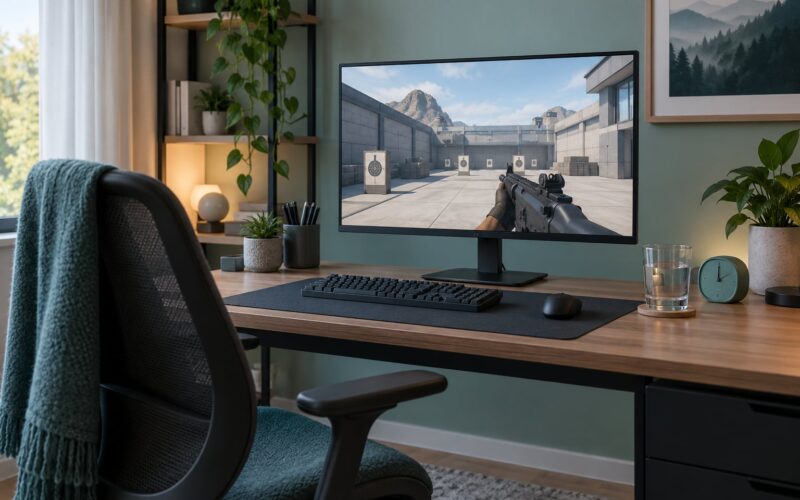
Repetition happens in sets with breaks, usually on a timer, because attention drops long before the hands do. Aim trainers like Kovaaak’s or Aim Lab are common for the mechanical side. Everything else comes from played games with a specific question attached.
Solo queue still has a place. The debate about whether it counts as practice is loud on r/esports, and both camps have a point: it is poor team preparation, but it is honest practice against unpredictable opponents with real matchmaking pressure.
How do esports pros practice teamwork?
Teamwork is trained in scrims and in the short sessions between them. The scrim is the drill; everything around it decides whether the scrim teaches anything.
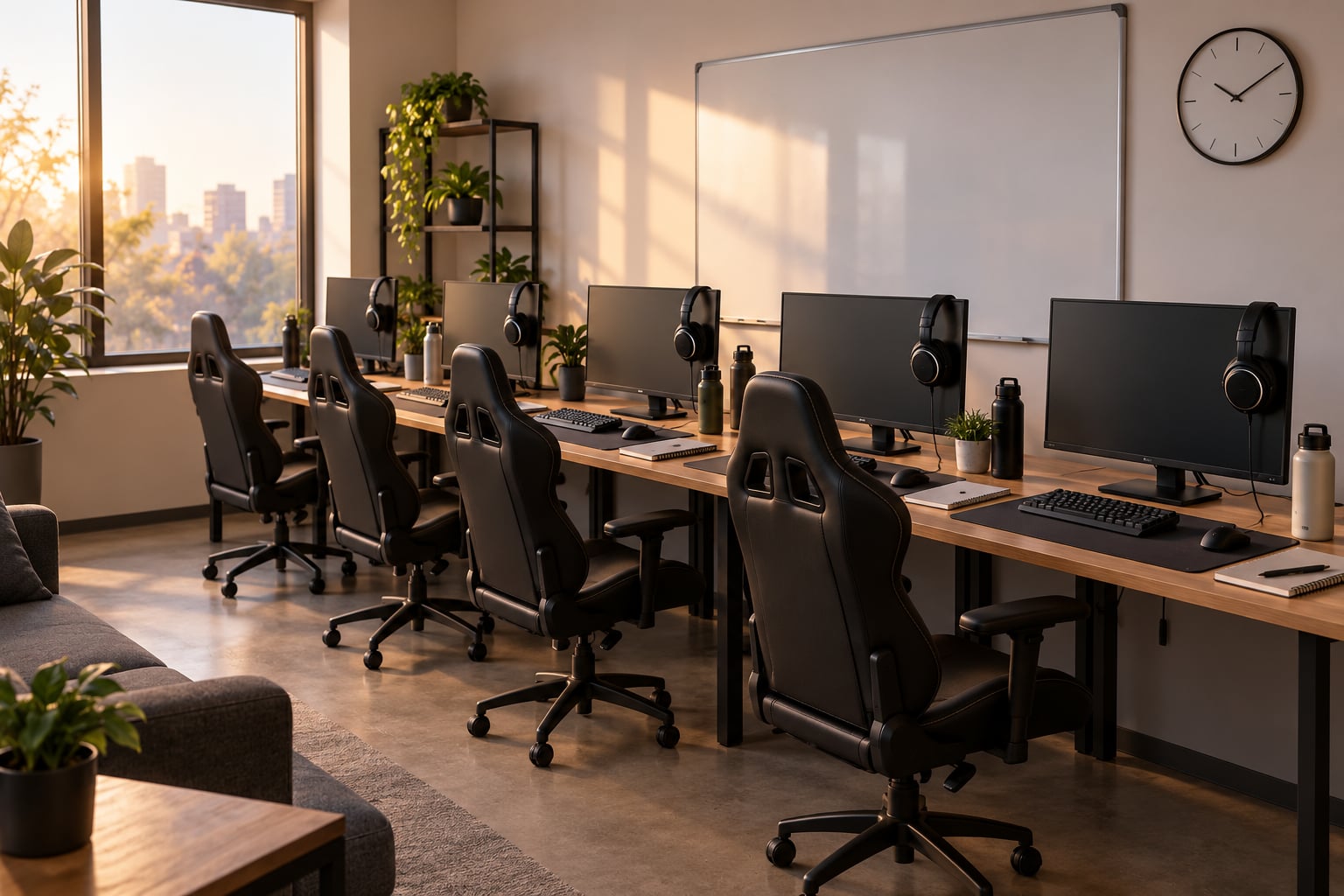
Scrims against real rosters. A five-stack playing a full best-of against another five-stack learns more in two hours than a week of private customs. Teams book these blocks in advance, and even then the organisation is messy. Players on r/esports and subreddit communities complain that booking scrims is chaotic at every level, because coordination runs on group chats and Discord pings that get buried.
Role-specific scenarios. Start from a scripted position and rehearse one response. Where do we stand after the first rotation fails, who holds the flank, what is the fallback timing. Rehearsed answers beat improvised ones under pressure.
Comms practice. Callouts get drilled separately from execution, because dead air is usually a habit problem rather than a knowledge problem.
Reviewing failed plays. Every loss gets looked at. The point is not blame, it is identifying the decision that turned a won round into a lost one, then assigning one adjustment each.
Not every session is tense. A good chunk of team practice is low-stakes customs and role drills, which is what keeps a nine-hour day from turning into nine hours of pressure.
How do esports pros review matches and improve their strategy?
VOD review is the block outsiders understand least and the one that pays the most. A scrim without review is just noise, because the mistakes players cannot name are the ones they repeat.
Reviews are timestamped, not watched end to end. A coach or analyst pulls the round where something broke, plays it back, and talks through the decision before the result. Sessions often cover own-team demos from the week plus a block of opponent footage, looking for tendencies: which map pool they lean on, how they behave when they are behind, which patterns they run after a lost gunfight.
Opponent prep is the other half. Before a match or a tournament, the team builds a picture of the other team’s habits, assigns read bans or bans to block those habits, and rehearses the situations that come up most.
Every review should end with an assignment. Two drills for the entry player, one scenario for the support, a comms fix for the whole team. Without that step, review becomes a meeting people sit through.
What do esports pros do after a practice session?
The last two hours decide whether the next day works.
Cooldown. Ten minutes of movement and stretching, then off the desk. Coming off a long scrim and immediately queueing ranked is how a good day turns into a wasted one.
Meals. Regular food, not an afterthought at 1 AM. Teams with a dietitian or a cook plan around the schedule, because eating well during a 14-hour day is a scheduling problem before it is a nutrition one.
Streaming and sponsors. This is a contract term, not a choice. The documented figure is around 40 to 60 streaming hours a month per player, and players have publicly dropped those hours to free up practice time. It sits in the evening because it is the only block left.
Personal time. Errands, food shopping, messages, a walk, a game that is not practice. In a team house this happens around housemates, which is part of why some orgs moved from shared houses to apartments.
Wind-down. Screens dim, lights out around midnight. Seven to nine hours of sleep is treated as performance work, not rest, because reaction time and decision-making degrade fast without it.
That last block is also where the physical cost shows up. Years of static posture produce the same complaints traditional athletes get, mainly shoulder, neck, and wrist strain, with eye strain layered on top. It is why the movement block and the physio work sit in the schedule rather than in the ideal column, and why the teams that keep players healthy longest are the ones that treat it as a training block like any other.
Burnout gets discussed less openly, but the warning signs are familiar. Sleep getting worse while practice stays the same volume, no interest in scrims that used to matter, snapping at teammates, and a general flatness that a day off does not fix. The teams handling this well build recovery in advance, not after someone breaks down, and they rotate rest days during the split instead of saving every break for the end of the season.
How does the schedule change before a tournament?
Tournament weeks look different in three ways: the opponent is known, the sessions are shorter, and recovery is protected more tightly.
Normal scrims give way to targeted preparation against the teams actually in the bracket. Sessions drop from three to five hours to two to three, because fatigue costs more than volume in a short tournament. The evening streaming block usually shrinks or gets moved, since sponsor content pauses during competition.
Sleep gets locked in early, and the movement block gets treated as part of the plan rather than optional. On match days the schedule compresses around a single evening: light warm-up, warm-up match, meal, review, play. Everything that is not directly serving the match is cut, and the day is over once the match is over.
Travel days sit in between, where a bootcamp or a venue block replaces the practice room entirely and the routine follows you rather than the building.
How the day changes for an unsigned or solo pro
Everything above assumes a roster, a coach, and an analyst. More players than ever are competing without that structure, and their esports pro practice day is built from scratch rather than handed to them.
A solo player books their own scrims, which usually means finding a group of equal-level players online and hoping everyone turns up. There is no team analyst, so the review happens alone, and the timestamps come from whatever the game recorded. Warm-ups and the sleep block are self-imposed, so they are the first things to slip when motivation dips.
The upside is control. A solo player can run a block purely on the weakness they care about rather than a team plan, and can queue a scrim against a specific style in a specific time window instead of waiting for an available roster. The trade-off is that nobody is watching the habits you cannot see in yourself, which is exactly what a review block and a coach are for.
How can aspiring esports players build a similar routine?
You cannot run a pro schedule on a part-time income, and trying is how people quit. Build the shape, not the hours.
Pick a fixed wake time. Consistency beats volume for six months straight.
Front-load solo work. Two to three hours on the one thing review exposed, done in the morning before the day starts.
Keep one team block. Two to three hours of scrims or team practice with a stable group, and a ten-minute review immediately after.
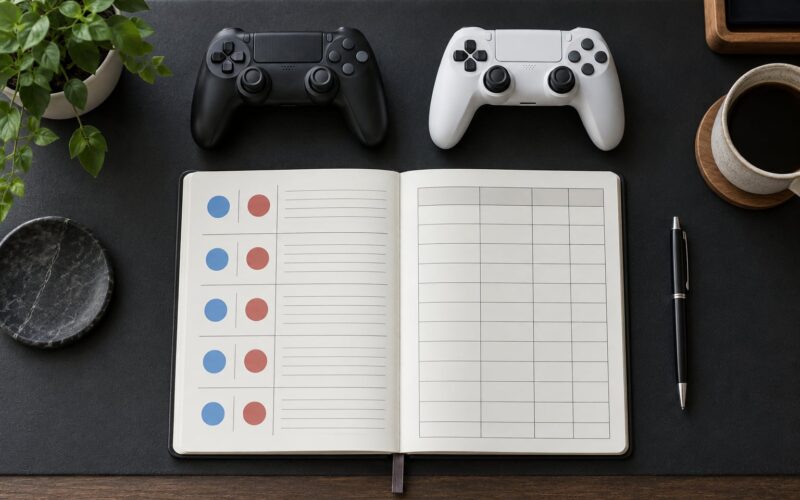
Write down assignments. Every session ends with one change you are testing tomorrow. A notebook works as well as an analyst.
Protect the edges. Movement, food, and a real bedtime. Four focused hours with review beats six hours of queueing.
Review weekly, not hourly. If you cannot get scrims, watch professional VOD reviews on YouTube as study material, which is exactly what a lot of competitive players do.
A four-hour day structured this way will move you further than a ten-hour day that is one long ranked session. Quality of feedback is the variable that actually compounds.
Frequently Asked Questions
How many hours a day do esports professionals practice?
Most professionals log six to eight hours of structured team practice a day, then add two to four hours of self-directed work such as aim drills, solo queue and review. Total weekly volume often lands above 30 hours once everything is counted. A typical esports pro practice day wraps all of that into a 10 to 14 hour schedule that includes meals, exercise, contractual streaming and a protected sleep block.
What does a typical esports pro do first in the morning?
The first thing is usually quiet and physical rather than gaming: water, breakfast, a shower, and ten minutes of shoulder, wrist and neck mobility work. Then comes a settings check and a low-intensity aim warm-up, followed by solo mechanical drills. Rostered players gather with the team around check-in time, usually between 1 and 2 PM, where the coach sets the day’s plan.
Do esports players practice every game they play?
No. Most of a pro’s game time is one game, or one role, played far past the point of ordinary fun. Roughly half of practice time is live play, and much of that is scrims against other professional rosters, plus solo queue and targeted drills. A player in a tactical shooter might drill entry timing twenty times in a row rather than playing another full match, and a MOBA player might rehearse one champion combo instead of queuing again.
How much of an esports practice day is spent on VOD review?
About 30 percent, which usually means one to two hours and often the most valuable block of the day. Reviews are timestamped rather than watched end to end: a coach pulls the round where a decision broke down, walks through it, and studies opponent footage for tendencies. A good review ends with assignments, meaning specific drills or scenarios the team rehearses in the next block.
Do professional esports players practice alone or with teammates?
Both, and the order is predictable. Solo work comes first, usually in the morning, because it is the only quiet window in a team house. Team scrims against other professional rosters take the largest block, commonly three to five hours in the afternoon or evening. The two alternate throughout the day, with a review session sitting between them so the notes get applied while they are fresh.
Can beginners follow a professional esports practice schedule?
Not the hours, but the shape. A structured four to six hour day beats an unstructured ten-hour session, and beginners gain most from adding a review block they currently skip. Pick a fixed wake time, do focused solo work early, keep one team block, write down one change to test tomorrow, and protect sleep, food and movement. Quality of feedback is the part that actually compounds.
Conclusion
A professional practice day is a structured loop, not a grind. Wake early, warm up properly, do focused individual work, play scrims against real opposition, review the recording while it is still fresh, move your body, handle the streaming hours, and sleep.
The part most people skip is the review. Start there tonight: play one session, write down the single decision that cost you the most, and fix that one thing in your next block. Structure beats volume, and the review is where structure actually turns into improvement.