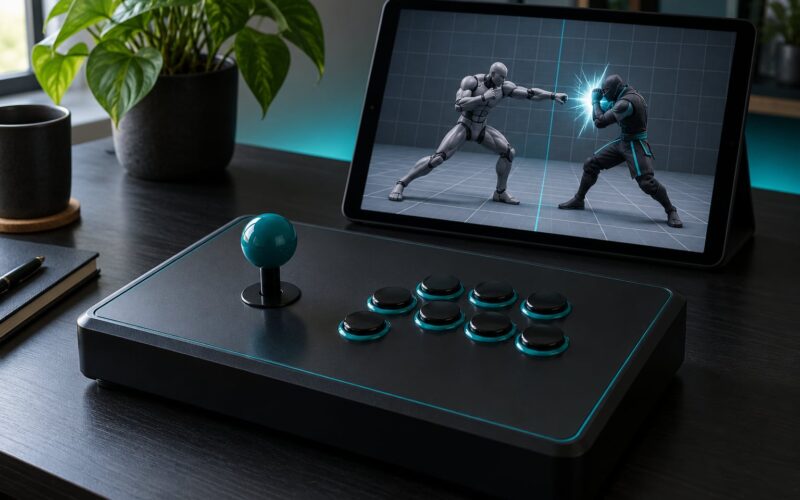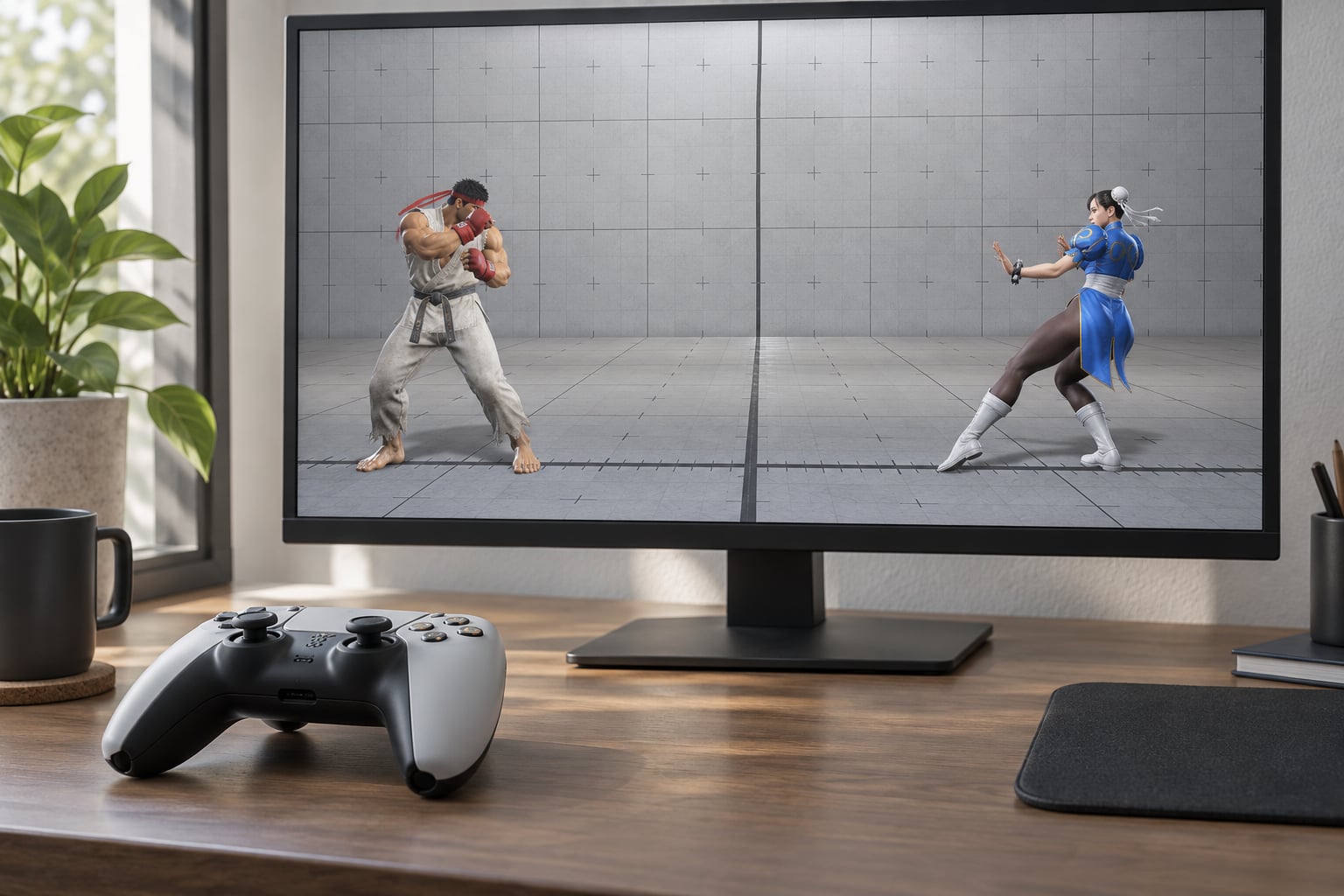
You beat button mashers by playing slower than they do: block cleanly, control the space so they cannot start mashing, and punish the recovery frames every attack leaves behind. That is the whole method, and it works because random inputs still have startup and recovery — a whiffed heavy punch leaves a mashing opponent just as helpless as anyone else. This guide is how to beat button mashers in fighting games with a repeatable routine, roughly 20 minutes of training a week.
The frustrating part is that it rarely feels natural at first. Standing still and blocking while a friend hammers the same button 20 times takes more willpower than throwing a combo out, and the instinct to press something the moment a string ends is exactly the habit handing over rounds.
So this is a mechanical fix, not a talent thing. Two things change: you learn where a masher’s buttons leave them open, and you train your hands to stay calm inside a blockstring. Do those two things and the matchup inverts.
Table of Contents
- What You Need
- Step-by-Step
- 1. Learn Their Attack and Punish Patterns
- 2. Control Space Before They Can Mash
- 3. Bait and Block Instead of Racing Them
- 4. Punish Repeated Whiffs and Panics
- 5. Convert One Opening Without Overcommitting
- 6. Practice the Matchup Instead of Blaming the Controls
- Common Mistakes
- Frequently Asked Questions
- How do you beat button mashers in fighting games?
- Does blocking on low or high work against mashers?
- Which buttons should I punish first against a masher?
- Is button mashing actually a valid strategy?
- How do I stop myself from button mashing?
- Why do I get hit even when I am holding block?
- Conclusion
What You Need
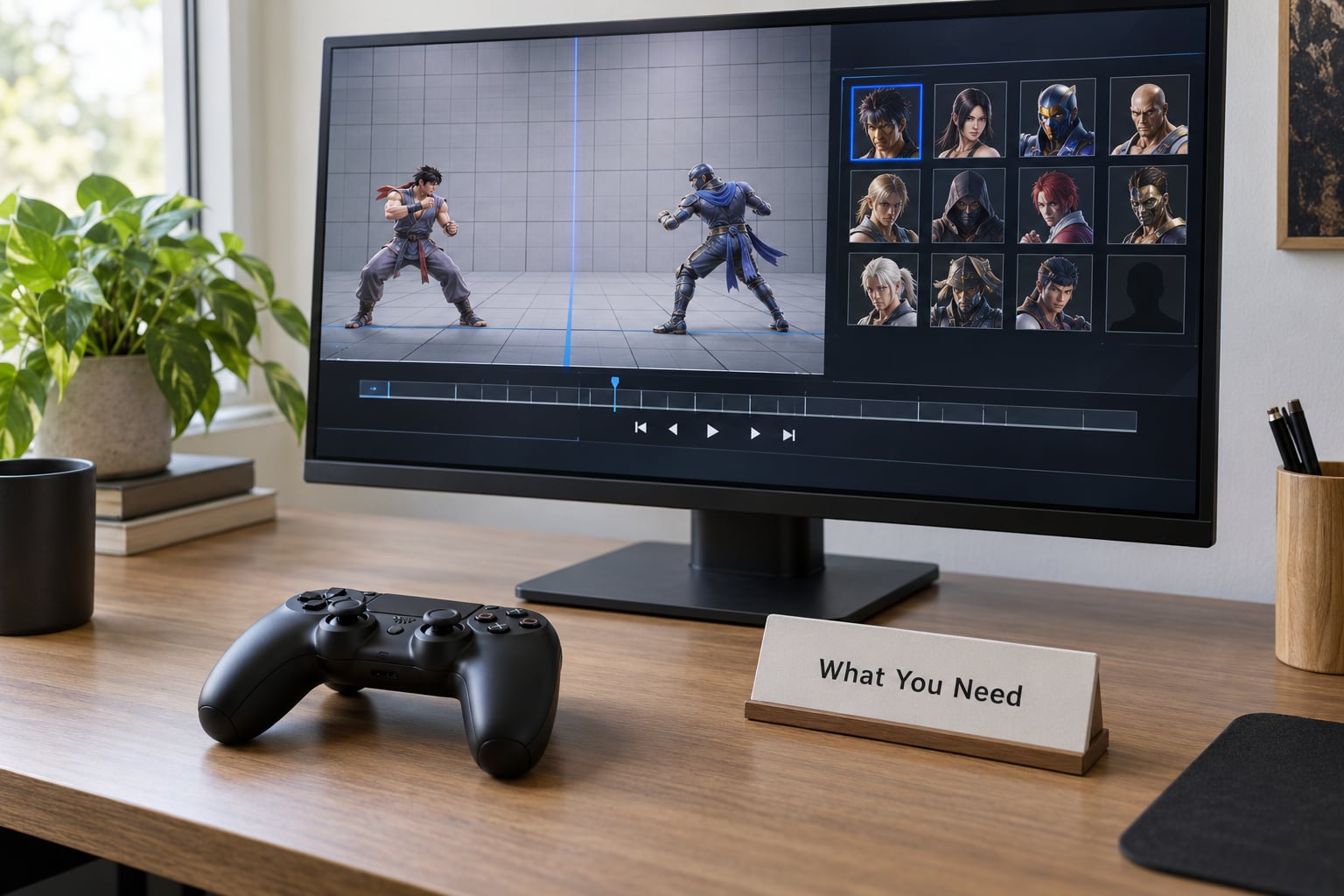
Four things, and none of them expensive or exotic.
A training mode with a dummy you can set. Every major fighter lets you freeze the dummy, set a health value, toggle block, and watch frame numbers. If your game lets you set the dummy to always block or always stand still, that is the most valuable tool in this whole guide.
Blocking you can do without thinking. The number one reason people lose to mashers is not their attacks, it is panicking inside a blockstring. Practise holding back through an entire three-hit string before anything else.
A way to see your own mistakes. Recording mode or a replay buffer turns guessing into evidence. You can watch the moment your guard broke instead of arguing with your memory.
Move lists for your character. You need startup frames, recovery frames, and on-block advantage for your fastest poke, your safest special, and your best punish. Character move lists exist for every roster in every current fighter, usually in the game’s own menu.
Step-by-Step
The full method is five moves in order: block clean, bait, whiff punish, frame trap, then convert with a route you already know. Almost everyone who loses to a masher is skipping the second half of that list — they block, then either mash out or stand there.
1. Learn Their Attack and Punish Patterns
Watch two full matches before you press anything. Mashers are wildly predictable; almost all of them have a single button they lean on because it feels good. Some players sit and mash light attacks forever, some walk forward holding everything, and some only start mashing the instant you commit to something. That last one is the most common pattern and the easiest to punish, because the commitment has to happen first.
Note three things: which button they hit most, what their attack looks like as it whiffs, and how long the recovery lasts. That third detail is the punish window. If their heaviest button is minus fourteen on block, you have fourteen frames of free attack before they can block again — enough for a fast poke, not enough for a long route, so pick something short and safe.
Set the dummy to their behaviour in training mode and drill the punish ten times in a row until your hands do it without thinking. That repetition is the entire method in miniature.
2. Control Space Before They Can Mash
Mashing only works at close range. The single best habit against it is walking backwards, because every step back denies them the range their fingers need.
Use your fastest poke to hold them at the edge of their best range, jump when they press a button they should not, and use projectiles or zoning if your character has them. Against a jumpy or rush-down masher, anti-airing is your panic button — a single well-timed intercept ends their turn instantly and buys you neutral back.
And if they are on a life lead, walk them into the corner. Cornered opponents have nowhere to retreat, which is exactly the pressure you do not want against someone who is a machine for finding gaps.
3. Bait and Block Instead of Racing Them
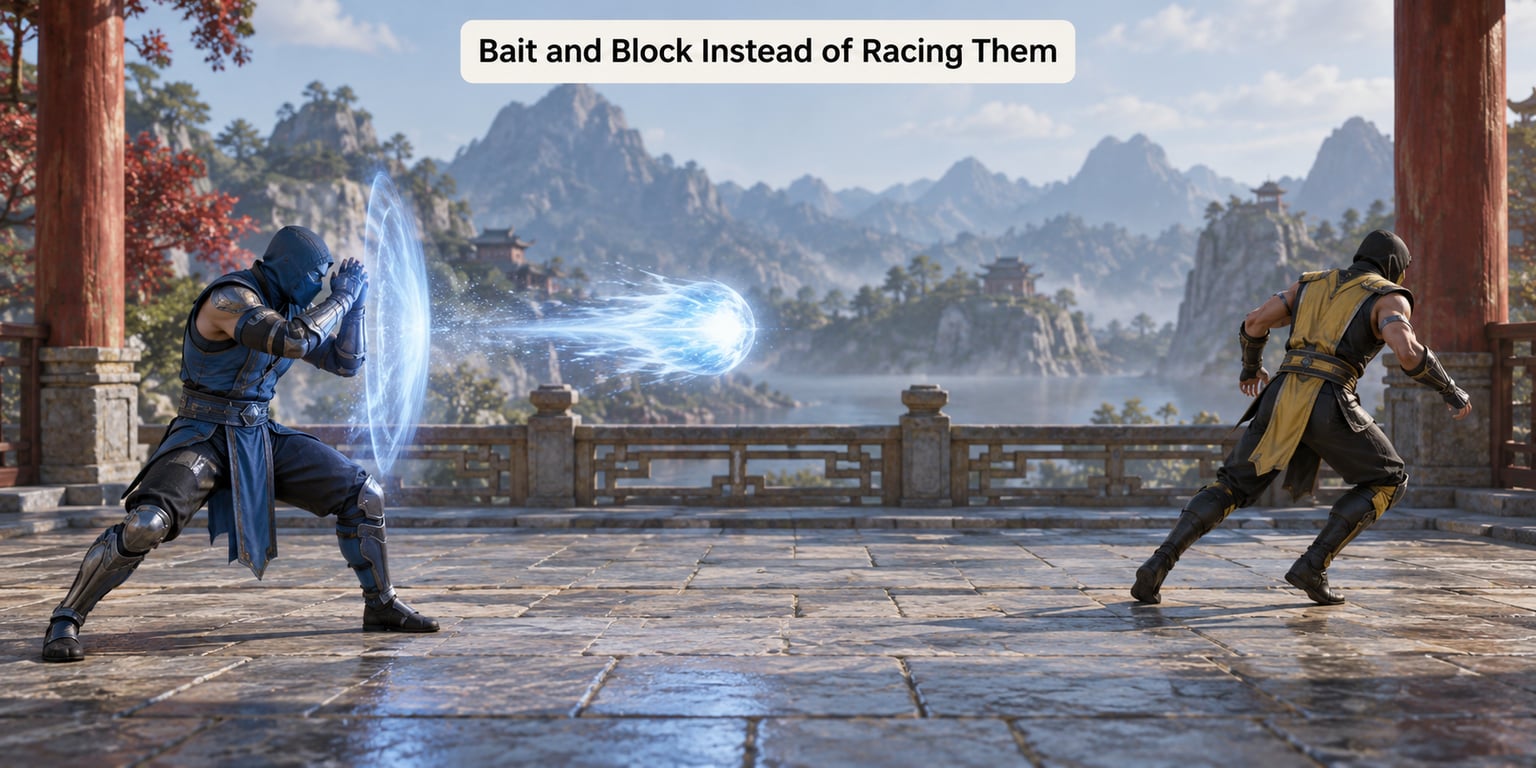
Patience wins this matchup. The masher needs you to make a mistake, so your job is to make none and wait for theirs.
Hold back through strings instead of mashing out — mashing out of a blockstring creates a guaranteed punish window for them, which is the single most common way these players score. Backdash away just before a string connects, then step forward into their recovery. That one pattern generates more openings than anything else you can learn.
Block selectively rather than blocking everything forever. Blocking passively forever gives a good masher nothing to react to, so mix in throws and command grabs, which most new players never tech, and pressure with short strings that end in a safe position.
There is a second version of this fight worth naming. Some mashers are not aggressive at all — they stand still and mash only when you approach. Against that type, walking forward and blocking is a legitimate and complete strategy, and the punish comes from poking a whiffed button rather than from rushing.
4. Punish Repeated Whiffs and Panics
Every attack has a recovery, and a recovery is free damage if you are close enough and fast enough. Watch for four openings: a whiffed heavy attack, a jump that lands nowhere near you, a poke they threw out and you blocked, and a reversal or super they used to escape pressure and whiffed.
Use your fastest reliable punish, not your flashiest route. A five-hit combo that works on paper and one 8-frame jab that always works are not equal, and only one of them will be there when you are panicking. Save the long routes for confirmed hits.
5. Convert One Opening Without Overcommitting
One punish is enough. Do not throw a full route at someone who blocks the first hit, because the whiff gives them a fresh mash.
Block the knockdown, jump only at a safe distance, and use short two-hit strings that leave you plus on block. After the last hit, take a small step back so the mashing does not resume. If you can, use a sweep to reset the position instead of a long sequence that ends with them standing up next to you.
A masher has no answer for pressure they did not start. That is when your own execution is allowed to be simple.
6. Practice the Matchup Instead of Blaming the Controls
Run a short session rather than grinding. Five minutes of blocking strings, five of whiff punishing the dummy on a setting that mashes, five of your safest two routes, and five of frame traps. That is the routine.
Frame traps are worth practising on their own: a move that on block is minus two or worse, so if they mash out of blockstring they eat it. Against someone whose hands move before their brain does, the frame trap often wins the round by itself.
Mashing behaves differently per game, so the punish you memorise in one title may not transfer:
- Street Fighter 6 — loose inputs still throw real pokes. Whiff punish the heavy, then frame trap or tick throw.
- Dragon Ball FighterZ — light auto-combos track and confirm themselves. Block the auto-combo, grab or cross-up, walk them to the corner.
- Tekken 8 — standing buttons are fast, but punishable. Punish the recovery, sidestep, anti-air the jump.
- Mortal Kombat 1 — auto-combos and unblockable strings. Delay the block, punish the string’s end, take the throw.
- Guilty Gear Strive — quick attacks whiff a lot. Whiff punish on block, dash out of pressure, punish the recovery.
- For Honor — mashing is often the correct read. Bait with feints, punish the dodge, play the guard beats.
- Super Smash Bros Ultimate — fast inputs convert into real damage. Punish the recovery, tech the throw, take the ledge.
Common Mistakes
Mashing faster. Two sets of hands going at once is still a coin flip, and their set is more consistent than yours. Stop competing on speed.
Panicking out of a blockstring. The instant you press a button to escape pressure, you hand them a guaranteed punish. Hold back and let the string end on its own.
Jumping into their pressure. Jumping toward a mashing opponent is one of the worst options in the game. Stay grounded and anti-air instead.
Throwing out unsafe buttons. A move that is minus on block loses the second you use it against someone who blocks by default. Check the frame data, not the looks.
Memorising guides without practising. Reading about punish windows does nothing for your hands. The dummy is where the learning happens.
Chasing long combos. A long route that drops one hit is worse than a short one that always works, because the drop feeds them a mash.
Assuming your inputs are dropping. Before blaming the controller, test it: a recorded 30-second sequence in training mode will show you if inputs are genuinely lost, and if they are, try a different stick or pad before changing anything else.
And if the masher is you — a fair share of people reading this are the ones mashing. The fastest fix is to learn two things per character: your fastest safe poke and your best punish, then stop pressing anything that is not one of those. Training mode combo routes, as fighting game communities have recommended for years, teach exactly this and nothing else.
Frequently Asked Questions
How do you beat button mashers in fighting games?
You beat them by playing slower and more deliberately. Block cleanly through strings, control the space so they cannot start mashing, bait with backdashes and wait for a whiff, then punish the recovery frames with your fastest safe move. Racing their inputs is a coin flip; punishing their recovery is not.
Does blocking on low or high work against mashers?
Both, mostly. Most mashers throw out a mix of high, low and overhead without tracking it, so holding back covers most of it. The moves that break plain blocking are the ones that force a direction change, so delay your block on blockstrings and mix in a few throws, which new players rarely tech.
Which buttons should I punish first against a masher?
Their heaviest attack, because it has the longest recovery and the biggest punish window. Whiffed jumps are second, since a jump that lands nowhere leaves them open for several frames. Avoided pokes come third, and panic reversals are the most rewarding punish but the hardest to react to in the moment.
Is button mashing actually a valid strategy?
Sometimes, genuinely. In games with tracking auto-combos like Dragon Ball FighterZ, or in For Honor and Brawlhalla, mashing produces a valid move and can be correct. In games built on whiff punishes, such as Guilty Gear Strive, mashing loses every exchange. The question is what the game rewards, not whether the player is good.
How do I stop myself from button mashing?
Cut the number of buttons you press from eight to two. Learn your character’s fastest safe poke and your best punish, and make those the only two you press in a match. Training mode combo routes are the standard fix, because they replace instinct with a sequence your hands can already perform.
Why do I get hit even when I am holding block?
Usually one of three things: you panicked and mashed out of the blockstring, you held the wrong direction for an overhead, or you released back early after a knockdown. Record a short match and watch the exact hit. Nearly always the input you pressed after blocking is the reason you got hit.
Conclusion
Start with one punish. Watch your next match, find the button they press most, note its recovery frames, and drill that punish in training mode until it comes out without thought. Then do the boring part: keep your distance, block the string, let them whiff, take the free hit, and walk away. Beating button mashers comes from repeating a correct decision under pressure, not from pressing harder than they do.