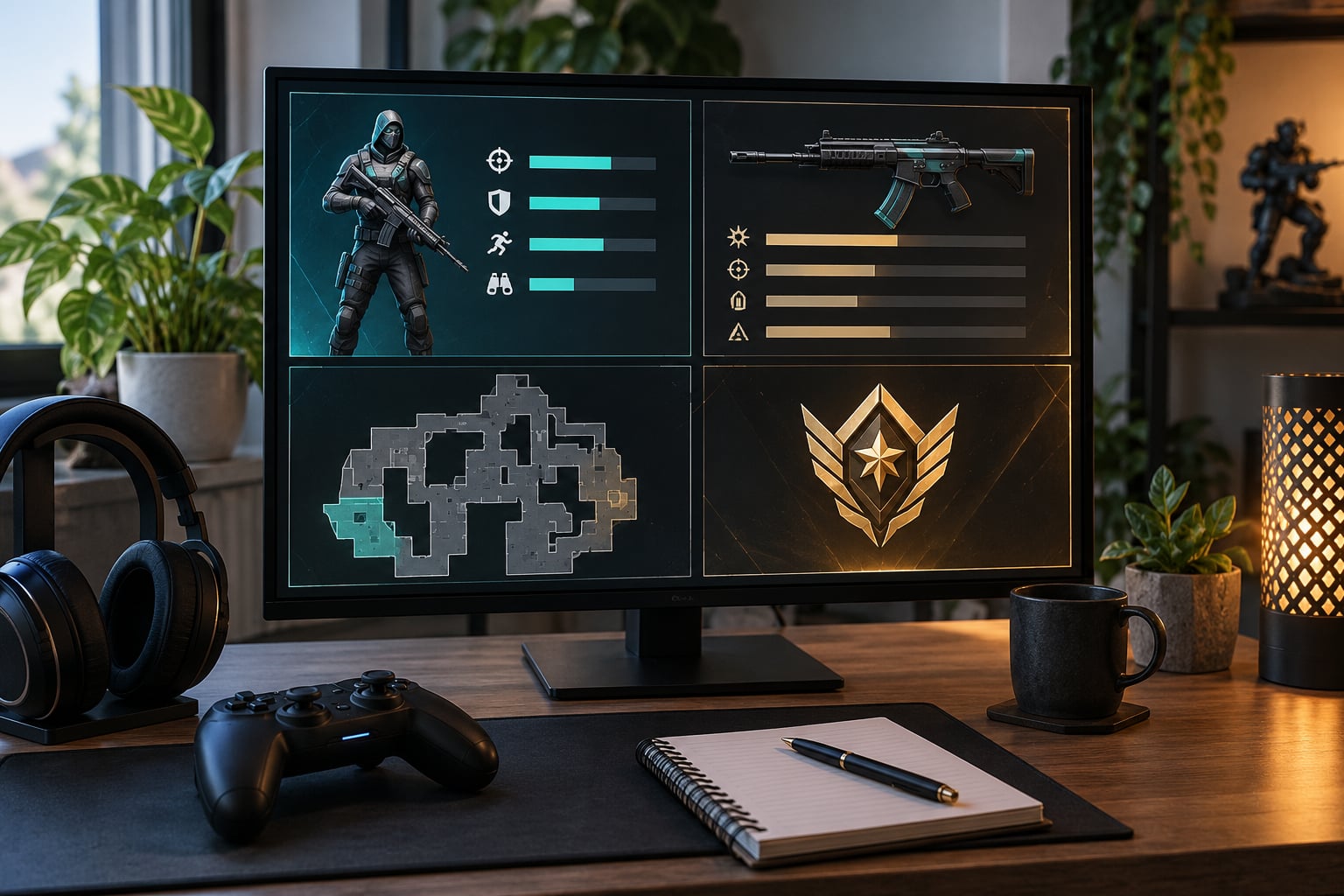
Seasonal updates change ranked play by touching several separate systems at once: the visible rank you see, the hidden rating matchmaking uses, the map pool, weapon and character balance, and the point values attached to winning and losing. Understanding how seasonal updates change ranked play comes down to knowing which of those layers moved, because a rule tweak on points feels very different from a rebalanced gun.
Most players experience a season launch as one confusing week. Promotions dry up, the same agent or legend feels weaker overnight, and matches feel slower or faster than they did last week. Almost all of that has a cause you can read in the patch notes, and most of it settles once enough matches have been played.
The rest of this guide breaks a season into layers, then walks through what each layer does to your ladder, how to tell an improvement from noise, and what to do in the first week.
Table of Contents
- What Do Seasonal Updates Change?
- How Seasonal Updates Change Ranked Play
- What Happens to the Ranked Ladder After an Update?
- Why Do Some Seasons Feel More Competitive Than Others?
- How to Tell Whether an Update Improved Ranked Play
- How Do You Measure Whether a Seasonal Update Changed Ranked Play?
- How to Adapt Your Strategy After a Seasonal Update
- What Should You Do in the First Week of a New Season?
- Frequently Asked Questions
- Does a seasonal update always reset my rank?
- Why does the ranked ladder feel unpredictable after a new season?
- Should I main the strongest character or strategy immediately?
- How long should I wait before judging a competitive update?
- Does seasonal ranking protect me against smurfs?
- Should I keep playing ranked when balance feels unsettled?
- Conclusion
What Do Seasonal Updates Change?
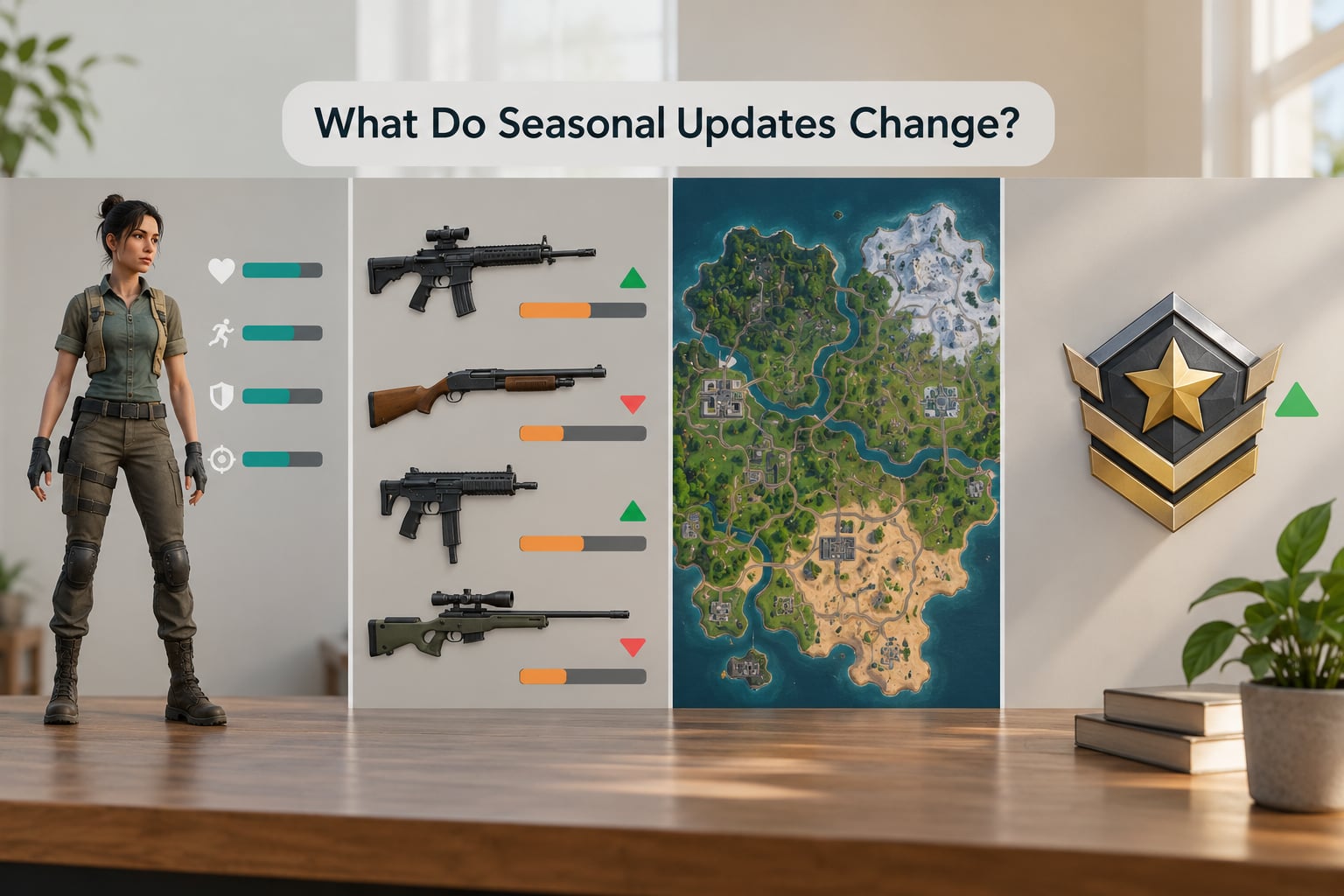
A seasonal update is a periodic content drop that restarts the competitive progression loop. Across most competitive titles these run on a 6 to 12 week cadence, which means you are dealing with two to four major updates a year, plus smaller mid-season patches.
The important habit is to stop treating it as a single event. A season launch usually contains five distinct layers, and each one affects ranked play through a different mechanism.
| What changes | Typical competitive effect | What to monitor |
|---|---|---|
| Balance patch | Changes win rates and pick rates for weapons, agents, legends or operators | Win rate and pick rate per option after a week of play |
| Map pool rotation | Removes maps you had learned and adds unfamiliar ones, shifting pacing and contest priorities | Average match length and how many fights happen in the first minute |
| Ranking rules | Alters reset magnitude, entry cost, point gains and losses by tier | Your rank point gain and loss per match at your tier |
| Matchmaking tuning | Changes how wide the skill range inside a lobby is allowed to be | Queue time and whether matches feel fair |
| Rewards and progression | Refreshes ranked rewards, battle pass integration and top-tier rewards | Whether your goals shifted from rank to cosmetics or the reverse |
Balance and map changes decide how the game feels. Ranking rules and matchmaking tuning decide how fast your rank moves. Rewards decide whether playing ranked is even the activity that serves your goals that season, which is worth admitting early because it changes how you should be queuing.
How Seasonal Updates Change Ranked Play
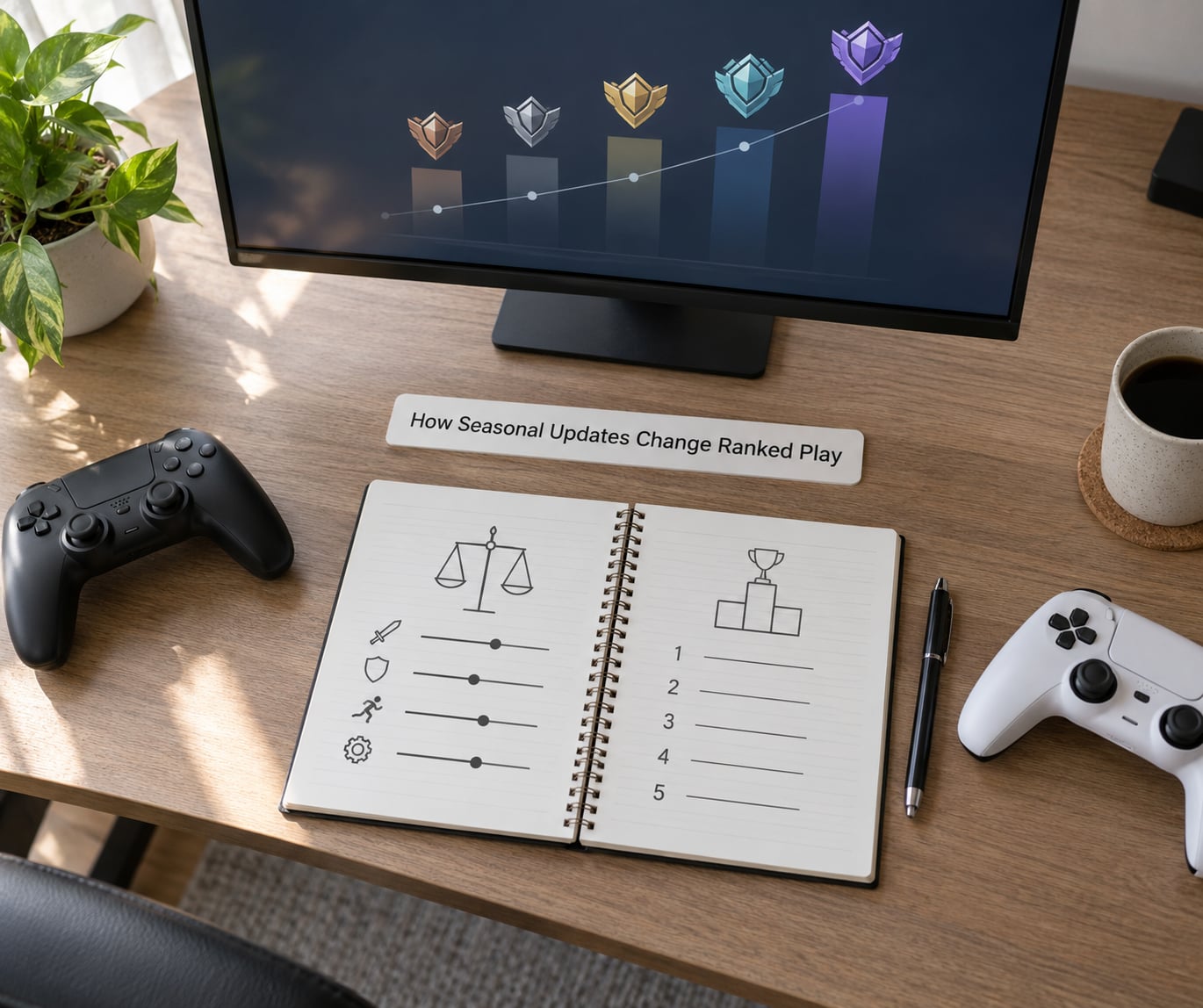
Small balance numbers can flip character selection completely. A three percent damage increase rarely looks decisive on paper, but if it moves one agent’s win rate by two points, professional play reorganises around that agent within a few days.
Pacing shifts are quieter and hit harder. Reduce the time to kill slightly and every fight starts earlier, which changes rotations, makes late-game positioning worse and rewards entry over holding angles. Increase it and the opposite happens: teams hold more, games stretch, and the map’s backline becomes the most valuable real estate.
Team composition follows pacing almost automatically. When fights happen sooner, protecting a fragile setup stops working. When fights happen later, that same setup pays off, and coordinated pushes give way to farming rotations.
Queue times and skill expression sit on top of all this. Some titles let a lobby span a wider rating band to keep matches filling quickly, and those queues feel shorter while skill expression drops. Others widen their search to protect match quality and you wait longer for a cleaner match.
Rating volatility is the piece most players misread. When entry cost or point scaling changes at your tier, the same performance produces a different number, and it looks like you got worse when nothing about your play did.
What Happens to the Ranked Ladder After an Update?
Ladder behaviour follows a fairly predictable arc. The first days are chaotic, the middle is where the meta starts to settle, and the end is where the numbers usually tell you whether the season worked.
| Stage | Symptoms | Likely cause | Recommended response |
|---|---|---|---|
| First 72 hours | Wild swings in both directions, losses that feel unwinnable, unfamiliar strategy everywhere | Placement matches running while the meta is unsettled | Complete required matches, queue with a consistent squad, avoid drawing conclusions from single results |
| First week | Rank moves sideways, win rate swings by several points between sessions | Pick rates still shifting, players still testing options | Compare your numbers to last season at the same game count |
| Weeks two to four | Ladder stabilises, the dominant strategy becomes visible in every lobby | Meta settled, placement noise averaged out | Commit to one adjustment and measure it over 20 or more matches |
| Late season | Promotions cluster, top-tier rating inflation becomes visible | Cumulative rating drift at high tiers, thin player pools | Judge the season on your own progress, not on leaderboard position |
The distinction that matters most is between rating volatility and real improvement. If your win rate is steady and only your rank point swings are wild, that is volatility. If your win rate fell by eight points against similar opponents, that is a real signal that something in your approach or in the game’s balance moved.
Keep one baseline number from last season: win rate after your first 30 ranked matches. It is the fastest way to tell whether a rough start is the game or your habits.
Why Do Some Seasons Feel More Competitive Than Others?
When a ladder feels sharp and fair, several conditions tend to line up at once. When it feels flat and random, usually one of them broke.
- Matchmaking width. Some updates widen the allowed rating band to protect queue times. Matches fill faster and skill expression falls with them.
- Rank group population. Thin tiers near the top of a ladder produce worse matchmaking regardless of the algorithm, because there simply are not enough players to search.
- Smurf pressure. Alternate accounts placed in lower tiers inflate the lobby everyone queues into, and the effect is strongest in the first two weeks.
- Map pool size. A small rotating pool gets solved quickly, so the same plan works for everyone and the ladder flattens out. A large pool slows that down.
- Counter availability. When one option reliably beats everything, the meta becomes predictable and the interesting matchups disappear.
- Unfamiliar strategies. The first weeks after a rebalance produce genuinely new lines that most players have not seen in high-rank play yet.
None of these are permanent states. They resolve at different speeds, which is why a season can feel rough for a week and sharp by week three, or the reverse.
How to Tell Whether an Update Improved Ranked Play
An update improved ranked play when match quality improved without shrinking who can compete. That is a narrower bar than it sounds, and most players judge it on win rate alone, which tells you about yourself rather than about the game.
Run this checklist roughly two weeks after launch, once matches have had time to accumulate:
- Queue times at your usual hours, compared with last season.
- Match duration, and whether the current maps are producing the pacing you expect.
- Side or spawn advantage on the new maps, since a large gap is usually a map problem rather than a play problem.
- Pick and ban rates, to see whether one option is dominating everything else.
- Matchup variety across your last 50 matches, counted manually if no tracker shows it.
- Rating movement, including whether losses cost you more at your tier than they did before.
- Skill group spread, which you can judge by whether you win some matches against players well below your level.
How Do You Measure Whether a Seasonal Update Changed Ranked Play?
Compare like with like. Take the same measure, on the same size sample, at the same point in the match count, against the same baseline. Pick rate and ban rate tell you whether the meta changed, side win rate tells you whether the maps are fair, and your own win rate after 30 matches tells you whether the game got harder for you or you got worse.
Win rate is the weakest signal on its own, because it mixes your play with the difficulty of your lobbies. Treat it as one input, and read it next to queue times and matchup variety.
How to Adapt Your Strategy After a Seasonal Update
A repeatable process beats panic. This is the one that survives contact with a season launch week.
- Read the notes as a priority list. Sort everything into what affects your main, what affects your opponents, and what affects only the reward track. Ignore the second and third groups for now.
- Name one competitive goal for the season. A climb, a placement in a top tier, or simply playing the new content with friends leads to very different queue decisions.
- Test in low-pressure matches. Practice ranges, creative modes and unranked queues let you try a reworked option without spending ranked points on the experiment.
- Rebuild team and map plans from what you just read. If the map pool changed, your rotation notes are worth less than you think.
- Track a small number of numbers that map to your goal, and review them once a week rather than after every session.
- Hold conclusions until the sample supports them. Twenty matches is a starting point, not a verdict, and one win streak proves nothing about a rebalanced agent.
Players who test outside ranked usually lose fewer ranked points during the learning week than players who figure it out in placement matches.
What Should You Do in the First Week of a New Season?
The first week has a shape. Here is how it usually goes, and what each day is good for.
Day one: read the notes and write down the three changes that affect you personally. Do not queue yet.
Day two: play unranked or practice modes and test the reworked option. Note how it feels, not how it scores.
Day three: finish any required placement matches with a consistent squad. Placements set your starting rating, and playing them with three different people means three noisy samples.
Day four: read how the top of the ladder is playing the new patch. Reviewers and trackers are more useful here than your own first ten games.
Day five: make exactly one strategic change and nothing else. Change a main, or change a habit, not both.
Days six and seven: play normally and record your numbers at the same game count you used last season. This is the only week where comparing to your own history is actually meaningful.
Most players who regret their first week regret queuing before the notes, then rebuilding three habits at once because the first two games felt bad. Slow that down and the season usually goes better.
Frequently Asked Questions
Does a seasonal update always reset my rank?
Not always, and it depends on the title. Some games perform a full reset that drops every visible rank, some do a partial reset that softens the loss, and a few keep the visible rank intact while adjusting the hidden matchmaking rating underneath. The reliable way to know is the seasonal notes published by your game, which almost always state the reset type and how much rating is preserved.
Why does the ranked ladder feel unpredictable after a new season?
Three things usually stack up. Placements run while the meta is still unsettled, so early results are noisy. Rating shifts as your number gets re-anchored to the new distribution. And the strategy landscape is genuinely unfamiliar for the first few days. Most of that settles within 72 hours, and the rest usually stabilises by the end of the first week.
Should I main the strongest character or strategy immediately?
Not immediately. Picking whatever the first community guide calls strongest tends to put you in the most contested lane, the most banned option and the least stable early patch state. Test the strong option outside ranked first, and check whether its win rate comes from the character or from the teammates you happen to be paired with. A one-week sample proves very little about a rebalanced pick.
How long should I wait before judging a competitive update?
Give it at least a week, and two if the patch was large. Pick rates and win rates move fast in the first 48 hours and keep moving as players adapt, so a judgement made on day one often describes a version of the game that no longer exists. Compare the same measure at the same game count against your own previous season rather than against the first three days.
Does seasonal ranking protect me against smurfs?
A reset helps, but only partly. Alternate accounts get re-placed near the bottom of the ladder at the start of a season, which pushes them into lower-tier lobbies for a while. The problem is strongest in the first two weeks, when the smurfs are still climbing and the higher-tier pools have not refilled yet. Nothing in the system stops a well-placed account from arriving in your lobby on day one.
Should I keep playing ranked when balance feels unsettled?
Yes, unless your goal is a tier you cannot afford to miss this season. Ranked is where you learn how the reworked options actually perform against real opponents, and unranked data tends to flatter whatever you just changed. If your goal is cosmetic rewards or simply enjoying the new content, a lighter schedule is reasonable. Otherwise play fewer matches and measure more carefully.
Conclusion
Work out which layer actually moved. Read the notes, sort the changes into balance, maps, ranking rules, matchmaking and rewards, and decide which one you are dealing with before you queue again.
Then compare your own numbers against last season at the same game count, make one measured strategic change, and give the update a full week before you decide it was good or bad.