Learning how to dodge roll timing in third-person action games comes down to one habit: pressing the roll so its short invincibility window overlaps the frames when the attack is actually live. Roll on the enemy’s wind-up and you finish the animation before the swing lands. Roll after the hitbox is already active and no amount of animation cancels the hit. Most players who say their rolls get ignored are actually rolling on the wrong part of the attack.
The fix takes a week of deliberate reps, not an hour of watching guides. You read the wind-up, wait out the startup, use spacing to buy reaction time, and protect the recovery frames after the roll ends.
Table of Contents
- What You Need: A Place to Fail Repeatedly
- Step-by-Step: How to Dodge Roll Timing in Third-Person Action Games
- Read the attack wind-up before the hit lands
- Use spacing to make the timing window larger
- Time the roll against the strike, not the animation start
- Protect the recovery frames after the roll
- Train the timing window in a repeatable drill
- Adjust for enemy speed, camera angle, and control style
- Common Mistakes and Their Fixes
- Frequently Asked Questions
- Should I press dodge when the enemy starts moving or when the attack lands?
- Is there one perfect dodge-roll timing that works in every action game?
- Why does my dodge always feel too early even when the attack misses?
- How do I learn dodge timing if I cannot see enemy frame data?
- What should I do immediately after the dodge roll ends?
What You Need: A Place to Fail Repeatedly
Before anything else you need somewhere you can die 30 times without walking through a loading screen. A training dummy in a souls-like, an arena in an action RPG, or the first two enemies of a new game all work. Instant retry is the point.
You also want at least one enemy whose attacks you can actually read. Newly unlocked enemies that telegraph slowly are ideal. A fast untrackable grab from a boss you have never seen teaches you nothing except panic.
Frame data is optional. Wikis and community frame guides for the games people still play list i-frame counts per roll type, and those numbers tell you the exact size of your window. But plenty of players never look, and reading animation is the transferable skill anyway. Treat frame data as a check on what you are already seeing.
Step-by-Step: How to Dodge Roll Timing in Third-Person Action Games
Read the attack wind-up before the hit lands

Every attack animation has three parts, and your dodge roll timing only cares about the middle one. Startup is the wind-up, where the enemy is visibly loading the attack. Active frames are the portion where the hitbox exists and can hurt you. Recovery is the enemy recovering its balance, which is your punish window.
Most of the visible motion happens in startup. A big overhead swing might spend most of a second lifting the weapon before anything can touch you. If you roll during that lift, your i-frames are already gone by the time the blade arrives.
Learn to watch the two or three frames right before the strike, not the start of the movement. In Elden Ring, players put the roll i-frames at about 30 frames, roughly half a second, positioned near the start of the animation. That means you want the roll to begin only when the swing is committed, not when it starts.
Use spacing to make the timing window larger
Standing at sword length forces you to react inside a few frames, and no technique survives that. Distance buys you the whole wind-up to watch.
Step back until the attack just reaches you and wait for the commitment before rolling. At that range you can see the full animation in the time available, and a partially readable attack becomes safe because you are not relying on the last sliver of reaction time.
Distance is also your best answer to tracking attacks. A swing that turns to follow a roll across five metres will miss the ground where you started. Across one metre it reaches you anyway.
Time the roll against the strike, not the animation start
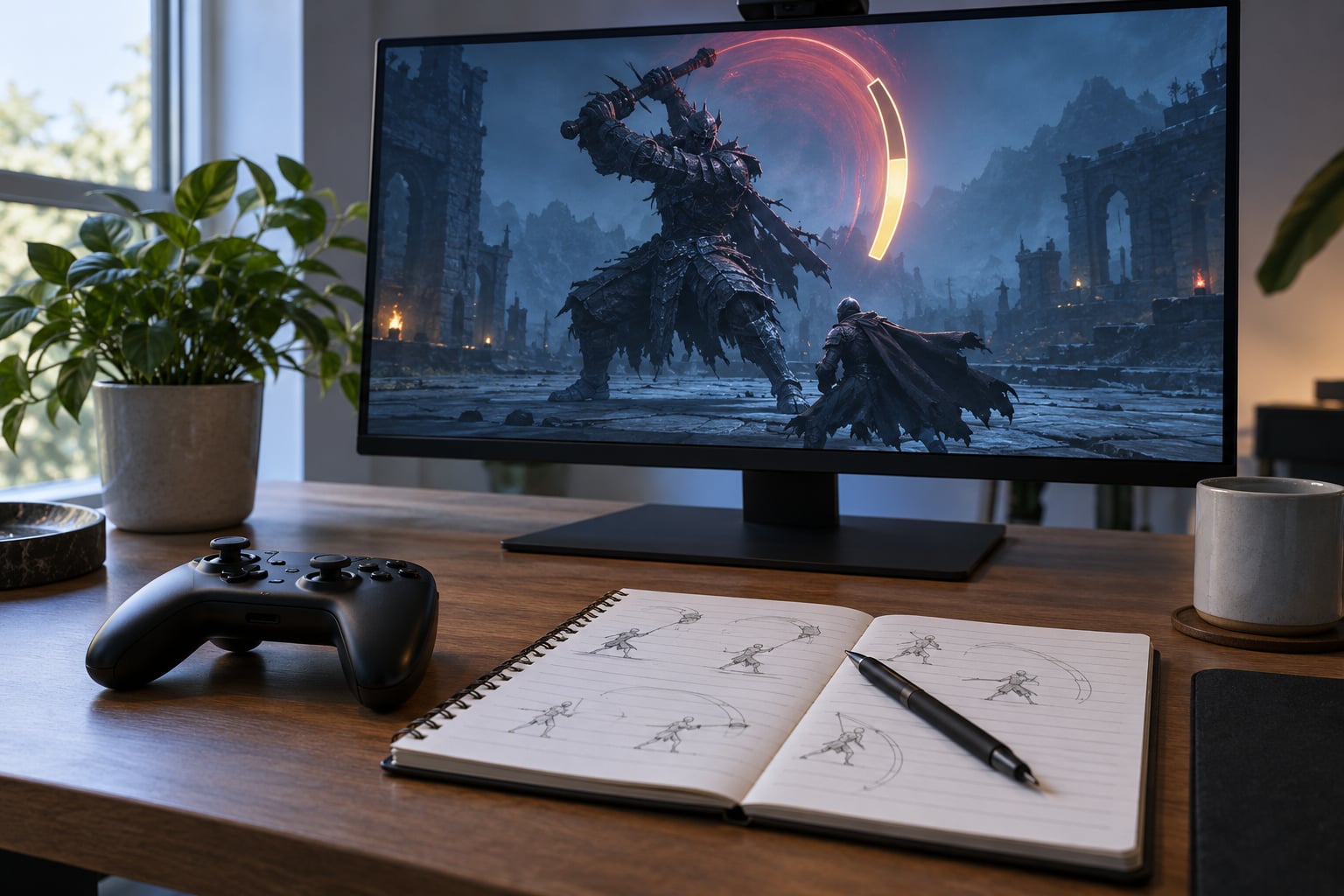
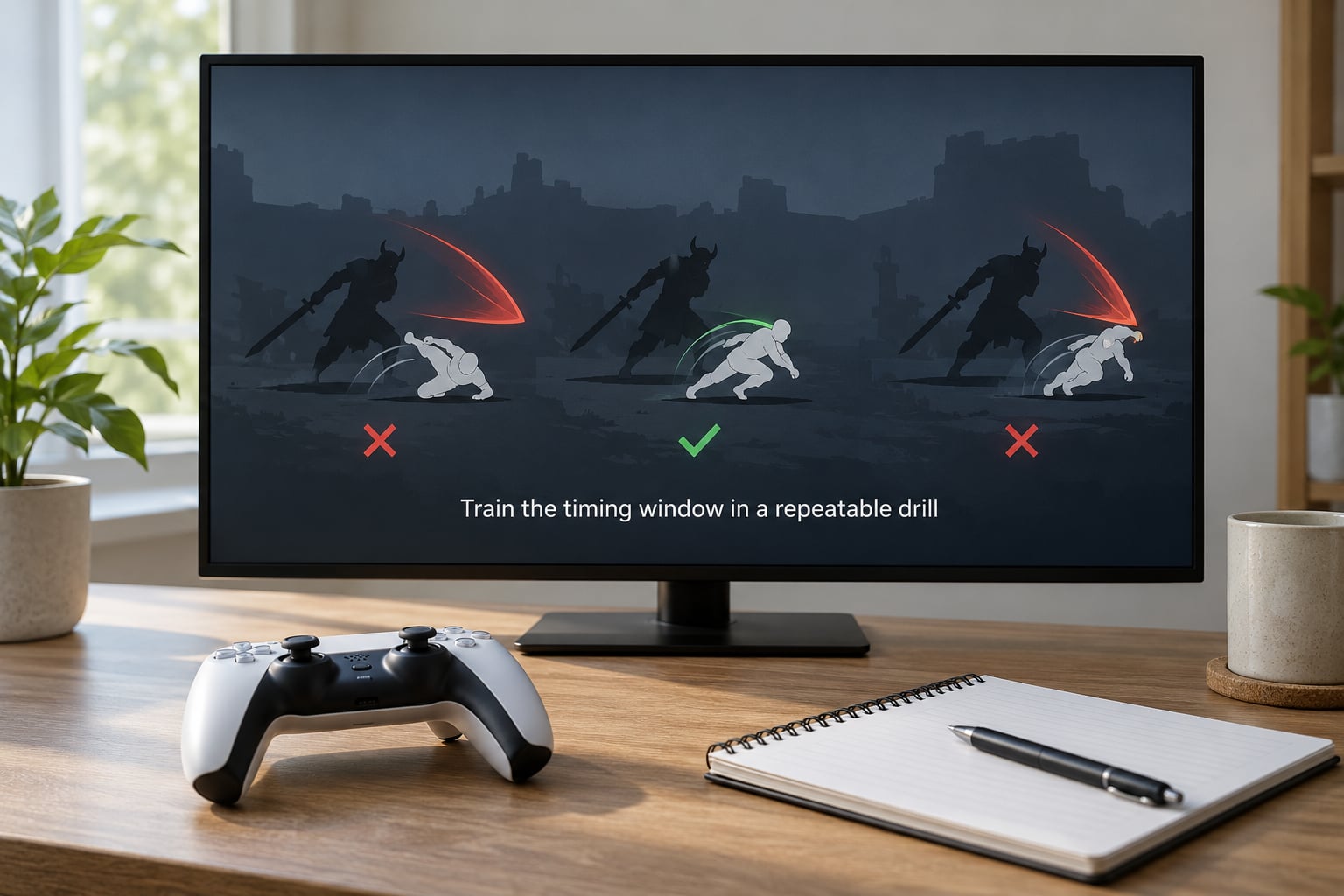
Three inputs, three different results. Press the roll during the wind-up and the hit arrives after your invincibility has expired, which is the most common failure. Press it after the hitbox is already active and you simply get hit, since the frames you needed are behind you. Press it as the strike commits and the hitbox passes through your character while the roll is protected.
Getting to the middle option is a matter of moving the input later than feels right. Nearly every beginner is early rather than late. On the r/fromsoftware subreddit, players describe the i-frame concept on rolls as genuinely unintuitive, and the troubleshooting is almost always “I was rolling on the startup.”
One concrete anchor helps: roll so the animation begins just as the weapon reaches its furthest point of the wind arc. That point is usually a frame or two before contact.
Protect the recovery frames after the roll
The roll finishing is not the same as the situation being over. Recovery frames are the animation lock after a roll, and any attack with a follow-up will land during them.
What you do next depends on the game and the enemy. Moving away buys safety and resets your spacing. Cancelling the roll into an attack works in games with generous roll cancels and punishes slow enemies hard. Blocking holds the line against a second swing in games where guard is reliable. Preparing another dodge keeps the option open when the enemy is clearly chaining.
Do the simplest safe thing while you are still learning. After the roll, walk out of range rather than immediately swinging. The instinct to attack comes from wanting the enemy to feel punished, and a whiff punish usually costs more health than it deals.
Watch stamina at the same time. Panic rolling in a chain burns the bar and leaves you unable to act exactly when you need to, and running out mid-fight is worse than taking one clean hit.
Train the timing window in a repeatable drill
Pick one slow attack from one enemy. Not a boss, not a whole set of attacks. One.
Then run this loop twenty times: stand at a comfortable range, let the enemy start the attack, roll on the committed frame, walk out, reset. Count how many of the twenty you took no damage from. Write the number down before you start, because the number is the only part that tells you whether you improved.
Change one thing at a time. Keep the count and roll deliberately a little later on the next block of twenty. If the hits cluster at the start, you are early. If they cluster at the end of the window, you are late. Ten attempts is usually enough to read that pattern.
Then add pressure gradually: one health bar left, stamina deliberately halved, or a second enemy in the room. Keep the same count. Once you clear twenty consecutive clean attempts on the easy version, move to a faster attack from a different enemy and restart the count at zero.
The r/Sekiro community treats timing as a habit that decays when you stop using it, and that is right. A counter that drops from eighteen to five after a week away is not lost skill, it is a pause. The same loop brings it straight back.
Adjust for enemy speed, camera angle, and control style
Fast attacks shrink the window you are aiming for, and no amount of reading compresses the difference. Watch the same enemy attack several times from outside the fight. The tell that only works at range is often a foot or shoulder shift, and it is worth knowing before you need it.
Camera distance changes perceived speed. A wide shot makes a wind-up look longer and a strike land further away than it did. Pull the camera in or lower the lock-on distance for the fights where reading is hardest, and turn off camera shake if the setting exists.
Frame rate and input setup both shift what your presses mean. A roll pressed a few milliseconds before a frame boundary resolves on the next one, and at lower frame rates the difference is easier to feel. Playing on a keyboard in a game built around a controller’s analog stick and buffering produces timing that transfers badly, so practise on the setup you will actually fight on.
Games differ in how forgiving the roll itself is. Some rolls lose invincibility on repeated use, so a third roll in a chain behaves nothing like the first. In Elden Ring the wiki data notes that repeated dodges and skills like Quickstep and Bloodhound’s Step can drop your i-frames, which means the same input produces a worse roll when you are tired. Stamina and press timing become part of the dodge timing, not separate mechanics.
Jumping is worth learning as a second option. In Elden Ring, jumping gives partial immunity to horizontal swings, with data putting it at roughly 25 frames of waist-down protection and about 5 recovery frames. It costs no stamina roll and it is short, but it does not protect against downward attacks, so treat it as a complement rather than a replacement.
And know when timing is the wrong tool. A tracking attack that turns through a correctly-timed side roll is not a timing failure. A player on r/Sekiro described rolling to the right against an armoured enemy only to watch it swing around and land anyway. Against attacks that track, spacing and direction matter more than the millisecond: move further, roll behind the enemy, or use a dodge with a longer movement arc.
Common Mistakes and Their Fixes
Rolling at the first sign of movement. This is the big one. Fix: ignore the start of the animation entirely and react to the moment the weapon finishes its arc.
Mashing the dodge button. Repeated rolls often carry reduced or no invincibility, so mashing makes you slower and more fragile. Fix: one deliberate input per attack, then walk out.
Fighting at sword length. You leave yourself no time to read. Fix: stay at the range where the attack just reaches you, and step back after every exchange.
Chasing the enemy the instant the roll ends. You walk into the follow-up during recovery frames. Fix: for the first week of practice, treat every roll as a retreat.
Using one timing against every attack. A slow overhead and a fast thrust share no window. Fix: keep a separate count for each attack type, and practise the fast ones last.
Rolling with no stamina left. The input comes out as a stagger or nothing at all. Fix: check the bar before the fight starts, not during the third panic roll.
One more habit worth adding: after every hit you take on a roll, ask which of the three parts of the attack you rolled against. Most players find they are always guessing wrong about startup, and naming it once fixes it faster than another ten attempts.
Frequently Asked Questions
Should I press dodge when the enemy starts moving or when the attack lands?
Press it when the attack commits, which is usually one or two frames before the hitbox reaches you and well after the wind-up began. Reacting to the first movement puts your roll into its startup and your invincibility ends before contact. Watch the end of the wind arc instead of the start, and step back a little further so you have time to see it.
Is there one perfect dodge-roll timing that works in every action game?
No. The principle is shared, the numbers are not. Window size, stamina cost, roll length and how much tracking an attack applies all vary by title and by difficulty, and some games make repeated dodges weaker. Learn the read-the-wind-up habit in one game, then re-measure the timing in the next rather than carrying your old rhythm across.
Why does my dodge always feel too early even when the attack misses?
If the attack visibly misses, the roll happened but the enemy was still tracking or reached further than you expected, so the hitbox touched you after your i-frames had ended. The fix is spatial. Roll from a longer distance, use a dodge skill with a bigger movement arc, or roll behind the enemy instead of sideways when the attack follows you.
How do I learn dodge timing if I cannot see enemy frame data?
You do not need it. Watch one slow attack five times in a row without rolling and note where the weapon stops moving and starts forward. That is the commitment point, and it is visible in every action game regardless of frame data. Use frame data later only to check your read, and treat your own hit count as the real measurement.
What should I do immediately after the dodge roll ends?
Step out of range first. The recovery frames after a roll are a real vulnerability, and walking out removes it. Once you are consistent, try cancelling the roll into an attack against slow enemies for a punish. Avoid swinging into a follow-up until your hit rate is high enough that the risk pays for itself.
Start tonight with one enemy, one attack, and a count of clean rolls out of twenty. Watch the commit point instead of the wind-up, keep your distance, and walk away after every roll. When the number climbs, add a faster attack, and you have the timing habit that every third-person action game will ask you for.