Most players don’t abandon an open world game because they hate it. They shelve it because the map turned into a to-do list nobody asked for. The fix isn’t more time or more discipline. Pick one definition of done, sort content into required and optional, and work in short sessions with a clear stopping point. Here’s how to finish open world games without getting overwhelmed, step by step.
That feeling has a name in the forums, and it’s usually described as the map looking like work. PlayStation trophy data cited by Kotaku shows just 29.8% of The Witcher 3 players and 34.4% of Horizon Zero Dawn players reached the ending, against 48.6% for Ghost of Tsushima. Meanwhile a Breath of the Wild completionist run has been counted at roughly 2,000 objectives, according to VICE.
Nobody quits because of the credits. They quit because optional content made finishing feel like an unpaid debt.
Table of Contents
- What You Need
- How to Finish Open World Games Without Getting Overwhelmed: Step-by-Step
- 1. Decide What Completion Means to You
- 2. Separate Main Story Activities from Optional Ones
- 3. Build a Small Weekly Quest Plan
- 4. Explore One Region at a Time
- 5. Use a Completion Checklist
- 6. Take Breaks After Intense Sessions
- Common Mistakes
- Frequently Asked Questions
- Why do most gamers never finish games?
- Should I 100% each area before moving on?
- How do I get back into a game I stopped playing months ago?
- Is it okay to skip side content and just do the main story?
- Why am I getting tired of open world games?
- How long should I play an open world game per session?
- How to Finish Open World Games Without Getting Overwhelmed: Start Small and Keep Moving
What You Need
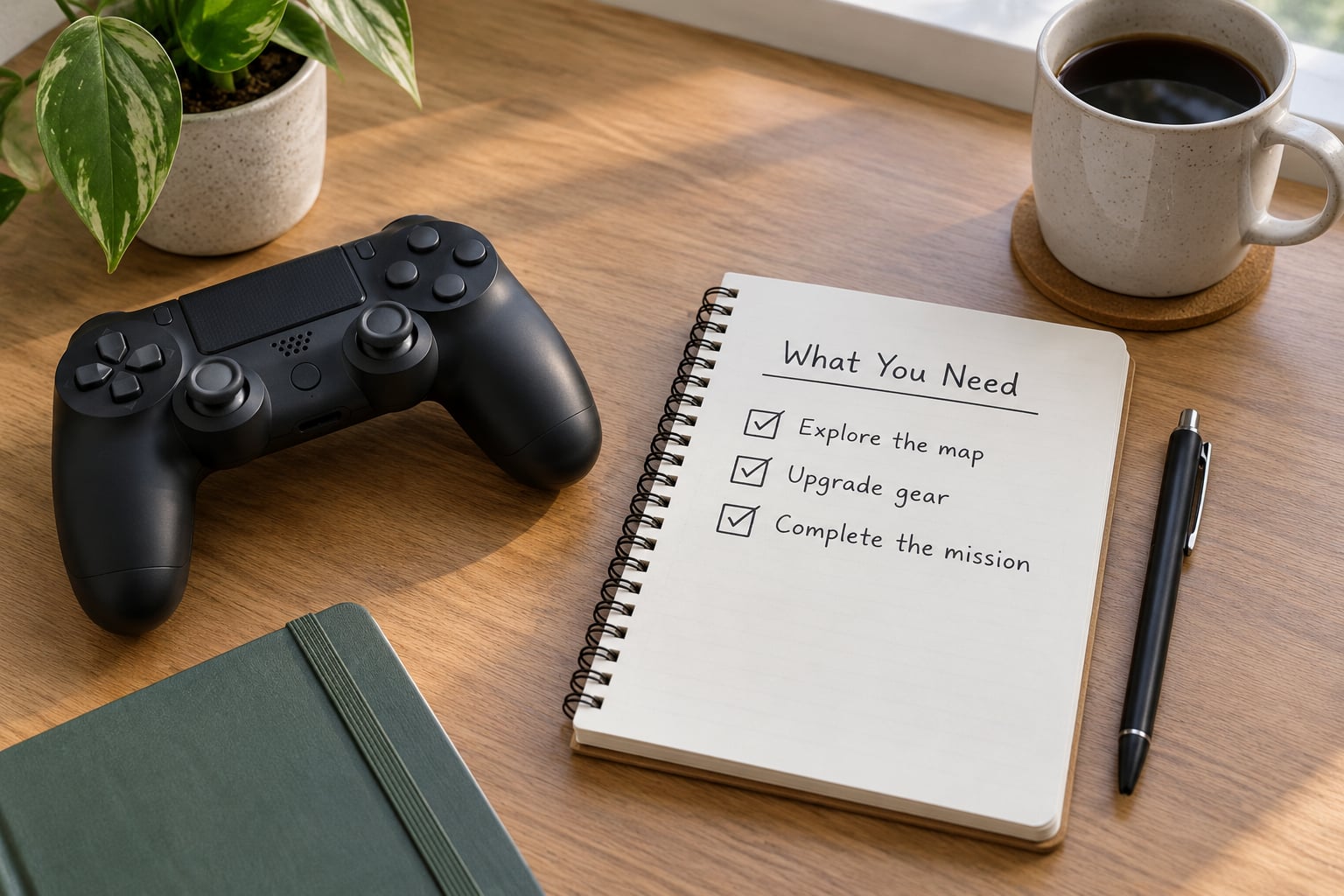
You need the game you’re already partway through and one way to keep track of what you decided matters. That’s it. No new hardware, no subscription, no external tracker app unless you enjoy tinkering.
Optional tools worth knowing about:
- The in-game quest log. Every major game has one. Most players simply never prune it, so it becomes a wall instead of a list.
- Map pins and bookmarks. Far Cry and Assassin’s Creed maps let you drop custom markers. Three pins beat forty icon clusters.
- A notes file on your phone. Two lines is enough. Where you stopped, and what’s next.
- A completion checklist. Five headings, not five hundred lines. More on that in step 5.
If a tool costs you more than a minute to maintain, it’s the wrong tool. A system you abandon in week two fixes nothing.
How to Finish Open World Games Without Getting Overwhelmed: Step-by-Step
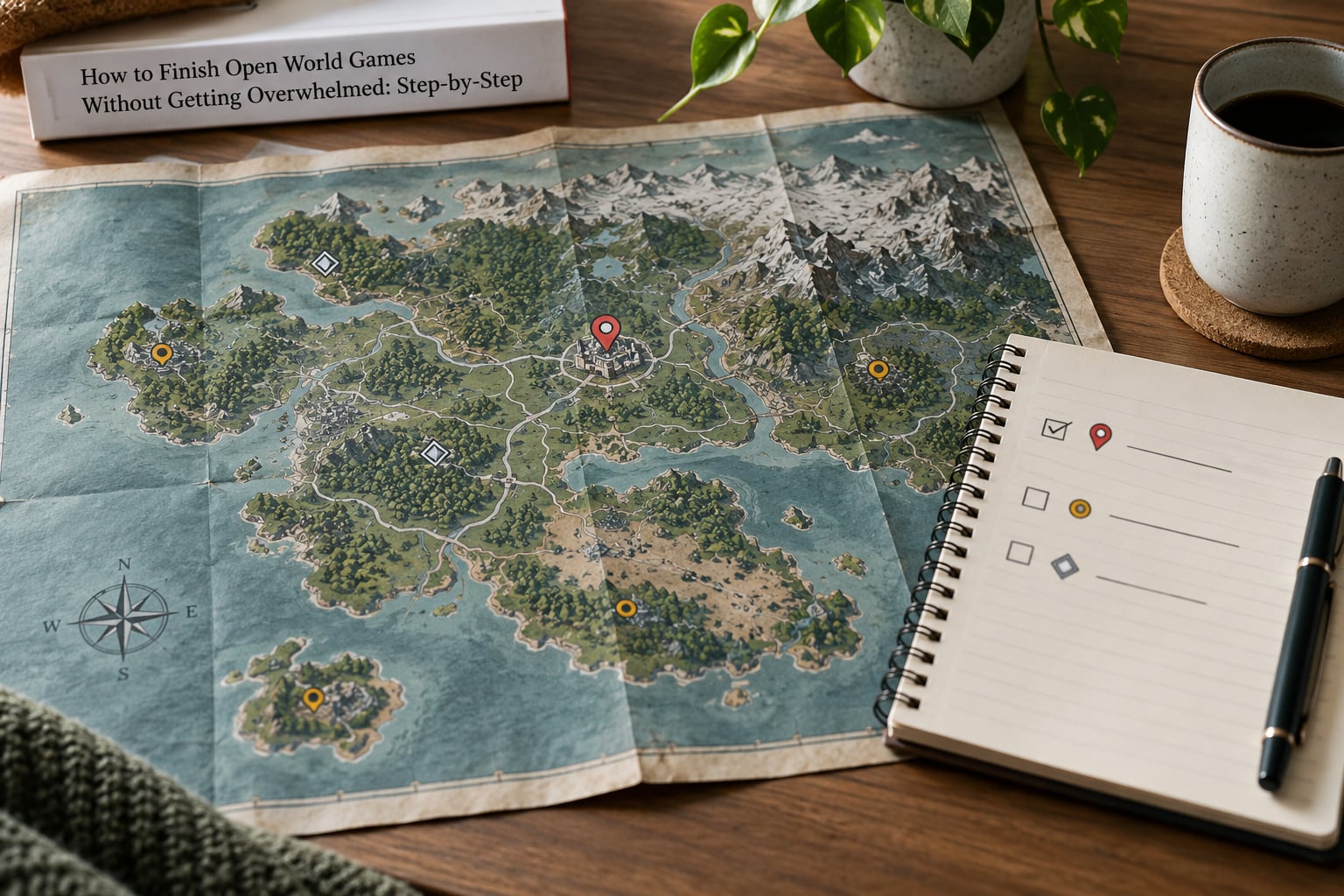
Six steps, in order. Decide what finishing means, sort the content into tiers, plan small, work one region at a time, track it in five lines, and stop before you’re sick of the game. Skipping ahead is fine; skipping the first two is what keeps people stuck.
1. Decide What Completion Means to You
Write down your finish line before you play another hour. Four versions work: the main story only, the main story plus the recommended activities, the main story plus one region done properly, or full completion if and only if you enjoy that kind of grind. All four are legitimate finishes.
The trouble starts when “done” has no definition, because then every map icon is unfinished business. A player on the PC Gamer forums described the other side of this clearly, finishing a whole area first because leaving it open felt like something they’d never return to.
Say it plainly, in writing: “I finish when the credits roll.” That’s a complete sentence and a complete plan.
2. Separate Main Story Activities from Optional Ones
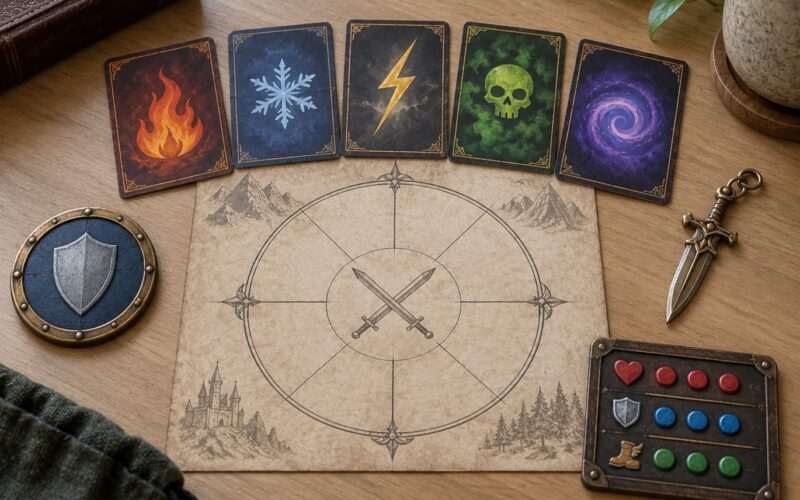
Sort everything the game offers into three labels: required, recommended, optional. Required means the ending changes or a skill unlocks. Recommended means a developer or wiki flagged it as notable. Optional means you found it because you walked past it.
Do this for the whole map in one sitting, on the map screen, not in-game. In Elden Ring, optional content is the entire legacy dungeon list and you’re not touching it unless you feel like it. In the Assassin’s Creed series, map icons cover nearly everything, which makes this step take an actual afternoon.
The point of labeling is that it stops every new discovery from silently becoming an obligation. Once something is labeled optional, you can walk past it a hundred times without a small charge of guilt.
3. Build a Small Weekly Quest Plan
Write a short plan per session, not per game. Two or three main story missions, one regional task, a handful of collectibles if you’re in the mood, and one upgrade. Six to nine items. Anything past that becomes a project.
Keep sessions between 45 and 90 minutes. That’s short enough that you actually start them and long enough to finish something. Set a stopping rule before you sit down: at the end of the next mission, I stop. Players on r/OldWorldGame described overwhelm peaking mid-game rather than at the start, and the most common piece of advice was exactly this, play for a couple of hours, then do something else.
Plans get written down where you’ll see them next time. Phone notes beat memory here.
4. Explore One Region at a Time
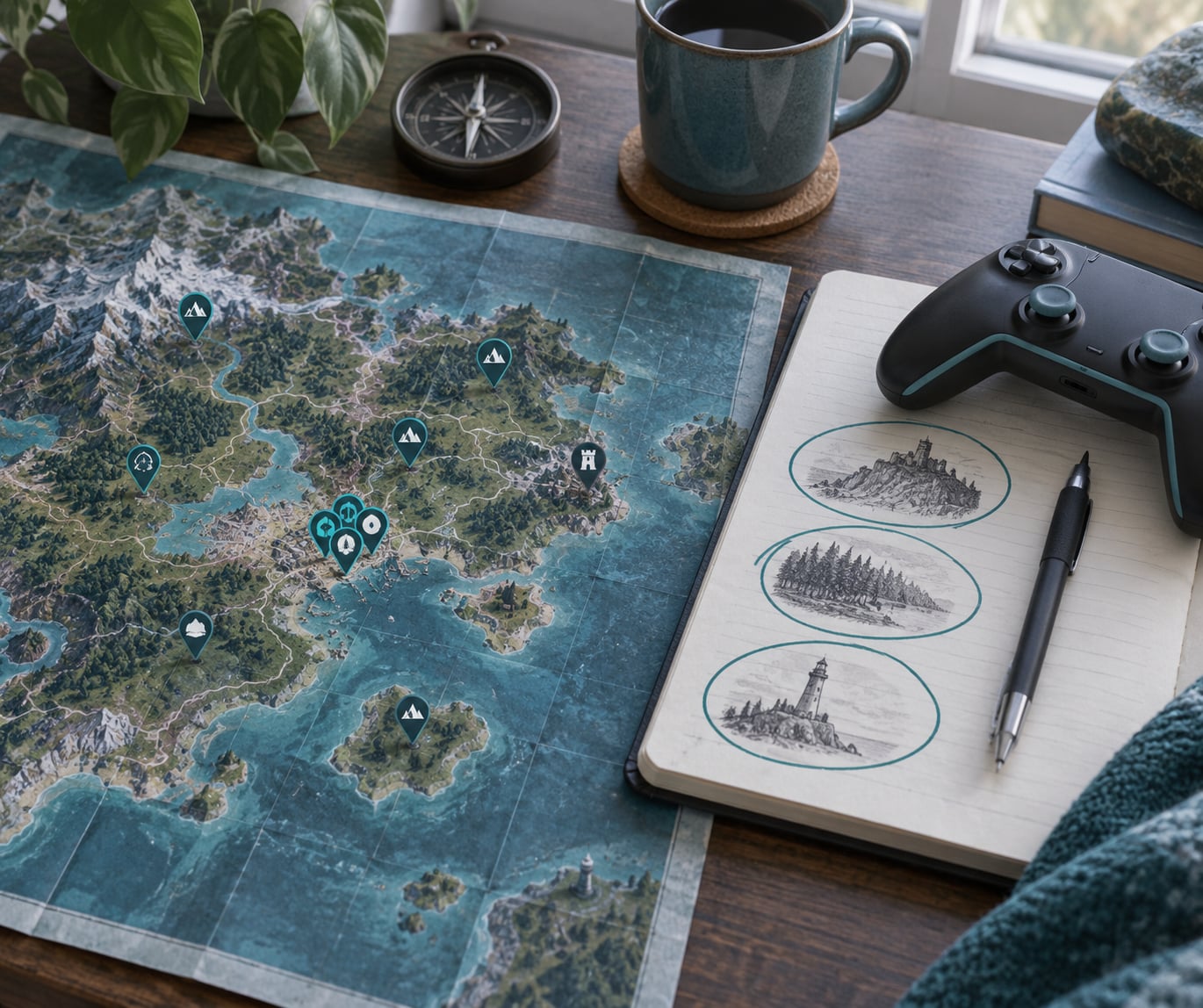
Break the map into regions and finish them in sequence instead of bouncing across the whole world every session. This is the single biggest cut to decision fatigue, because at any moment you only have one question to answer: what’s left here?
Cross-map running is also why fast travel can feel like an obligation rather than a convenience. Fast travel should get you to the region you’re working on, not to the three other things you spotted an hour ago.
A player who burned out at 30 or 40 hours on stretched open worlds now picks games where the world is the point. Region-at-a-time is how you keep a big map from turning into screen clearing.
5. Use a Completion Checklist
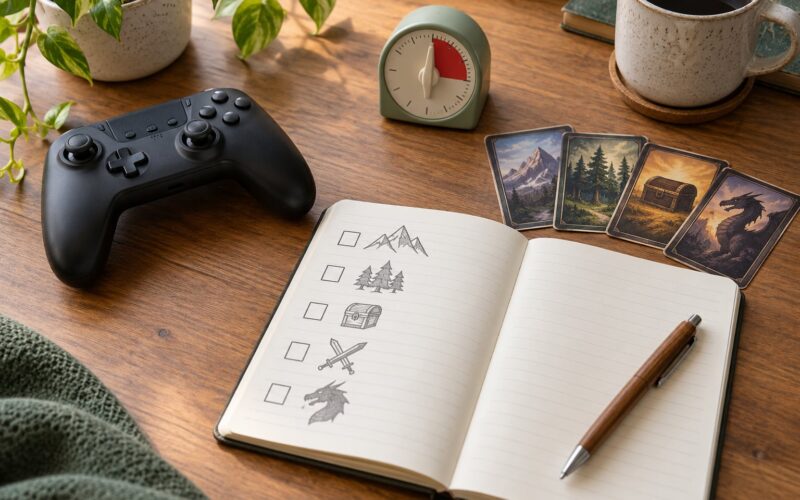
Five headings, and nothing below them unless it’s genuinely important to you:
- Main objective
- Major side activities (quests that change something)
- Collectibles, only if collecting is your thing
- Upgrades or skill tiers you actually use
- Personal must-dos, the handful of things you’d regret missing
Minor quests, incidental collectibles, and optional world events go on no list. They exist, they’re visible, and you’re not counting them.
This is the whole trick. A five-line checklist you finish feels like an achievement. A 400-item tracker you abandon in a month feels like failure, and it’s why the map keeps winning.
6. Take Breaks After Intense Sessions
Short breaks work better than long ones. Heidi Grant Halvorson’s research, cited in Harvard Business Review and popularized by Kotaku, is that roughly three days off restores more than a week away. Come back, play something smaller in between, and pick the big game up again.
Before you close the game, write two lines: where you stopped, and the one thing you’re doing next. That single next action is what makes returning painless. The recurring complaint in the forums is players restarting from an old save because they couldn’t remember where they were, which loses progress and deepens the whole problem.
Post-credits emptiness is real and worth expecting. Have the next game lined up before the credits roll.
Common Mistakes
Starting every side quest you walk past. The quest log grows and the main story never advances. Fix: label content before you accept it. Optional means optional.
Committing to 100% completion. Chasing a trophy list in a game with 2,000 objectives is a hobby, not a finish line. Fix: set the requirement at “main story plus recommended” and call it complete.
Following the map in random order. Icons are not a suggested route, they’re a list of every unfinished thing in the game. Fix: one region per session.
Ignoring difficulty and build choices. A wall in the first ten hours is what pushes people toward external guides. Fix: lower the difficulty before you look anything up. Most games let you change it later.
Playing marathon sessions to catch up. A 200-hour game doesn’t catch up. Fix: 45 to 90 minutes, ending on a mission boundary rather than in the middle of something.
Treating the map as a record of failure. Every icon you haven’t cleared reads as debt, and the game stops feeling like play. Fix: hide or ignore the optional layers on the map if the game lets you, and let the rest go.
One last note on the emotional version of this. For some players overwhelm isn’t about time, it’s anxiety, and Barry Schwartz’s paradox of choice is a fair description of standing on a hill with four hundred visible destinations. If that’s you, guides are a legitimate tool. Checking a wiki for early gear or quest ordering costs you less than the hours you’d lose to a wall, and the completionist anxiety that comes from wondering whether you missed something missable is real too.
Frequently Asked Questions
Why do most gamers never finish games?
Trophy and achievement data shows players abandon most games before the credits, and open worlds have the widest gap of all: around 29.8% of The Witcher 3 players and 34.4% of Horizon Zero Dawn players finished, against 48.6% for Ghost of Tsushima. Dislike is rarely the cause. The optional backlog is.
Should I 100% each area before moving on?
Only if leaving a region unfinished genuinely bothers you. Area-completers do this because it feels tidy, and it works for them. For everyone else it turns exploration into chores and burns the game out early. Pick one region at a time rather than one whole map’s worth.
How do I get back into a game I stopped playing months ago?
Load the most recent save, read the two-line note you wrote last time if you have one, and set a two-hour main-quest-only rule for the first session back. Ignore the quest log backlog entirely on that first return. The goal is to re-enter the story, not to audit three months of content.
Is it okay to skip side content and just do the main story?
Yes, and it’s the most common way players actually finish. Side content is where completionists lose their finish line, and skipping it costs you nothing at the credits unless a specific quest changes the ending. Check that game’s ending conditions once, write them down, then stop worrying.
Why am I getting tired of open world games?
Usually because the genre’s surprises ran out. Map-filling objectives and fetch quests feel like screen clearing rather than discovery, and what used to feel limitless now arrives on a predictable cadence. Games with restrained iconography, like Red Dead Redemption 2 or Elden Ring’s Sites of Grace, tend not to cause it.
How long should I play an open world game per session?
Between 45 and 90 minutes, ending at a mission boundary rather than mid-objective. Shorter sessions you actually start beat long ones you plan and skip. Leave a note about the next action, and take about three days off between stretches instead of a full week.
How to Finish Open World Games Without Getting Overwhelmed: Start Small and Keep Moving
Do one thing tonight. Decide what finishing means for the game on your save file, write it in a note, and identify the next main objective. Everything else waits until the story moves again.
The overwhelm was never about how much content the game has. It was about having no finish line, and no filter. Give it one of each and the map goes back to being a map.
Last reviewed October 2026.