Most gaming headsets last about 12 to 24 months with regular daily use, and 3 to 5 years if you play a few hours a week. Hours worn per day matters far more than price, and every headset eventually fails somewhere specific: the ear cushions, the headband joint, the cable, or the battery.
That range is the honest one. Plenty of manufacturers and reviewers avoid giving a number at all, which is why so many gamers end up surprised when a headset dies at 18 months. This guide breaks the lifespan down by usage level, ranks the parts that fail first, and shows you which problems are worth repairing and which ones mean the headset is finished.
Updated for October 2026.
Table of Contents
- How Long Gaming Headsets Usually Last
- What Determines a Gaming Headset’s Lifespan?
- Hours of wear per day decide the calendar lifespan
- The rest of the variables, ranked by how much they matter
- Common Reasons Gaming Headsets Stop Working
- How Usage Affects Headset Longevity
- How to Extend the Life of Your Gaming Headset
- Repair or Replace the Headset?
- Frequently Asked Questions
- How often should you replace a gaming headset?
- What is the lifespan of a gaming headset?
- Why is my gaming headset dying so fast?
- Can headphones really last 20 years?
- How long does a wireless gaming headset battery last?
- Which gaming headsets are the most durable?
- Conclusion
How Long Gaming Headsets Usually Last
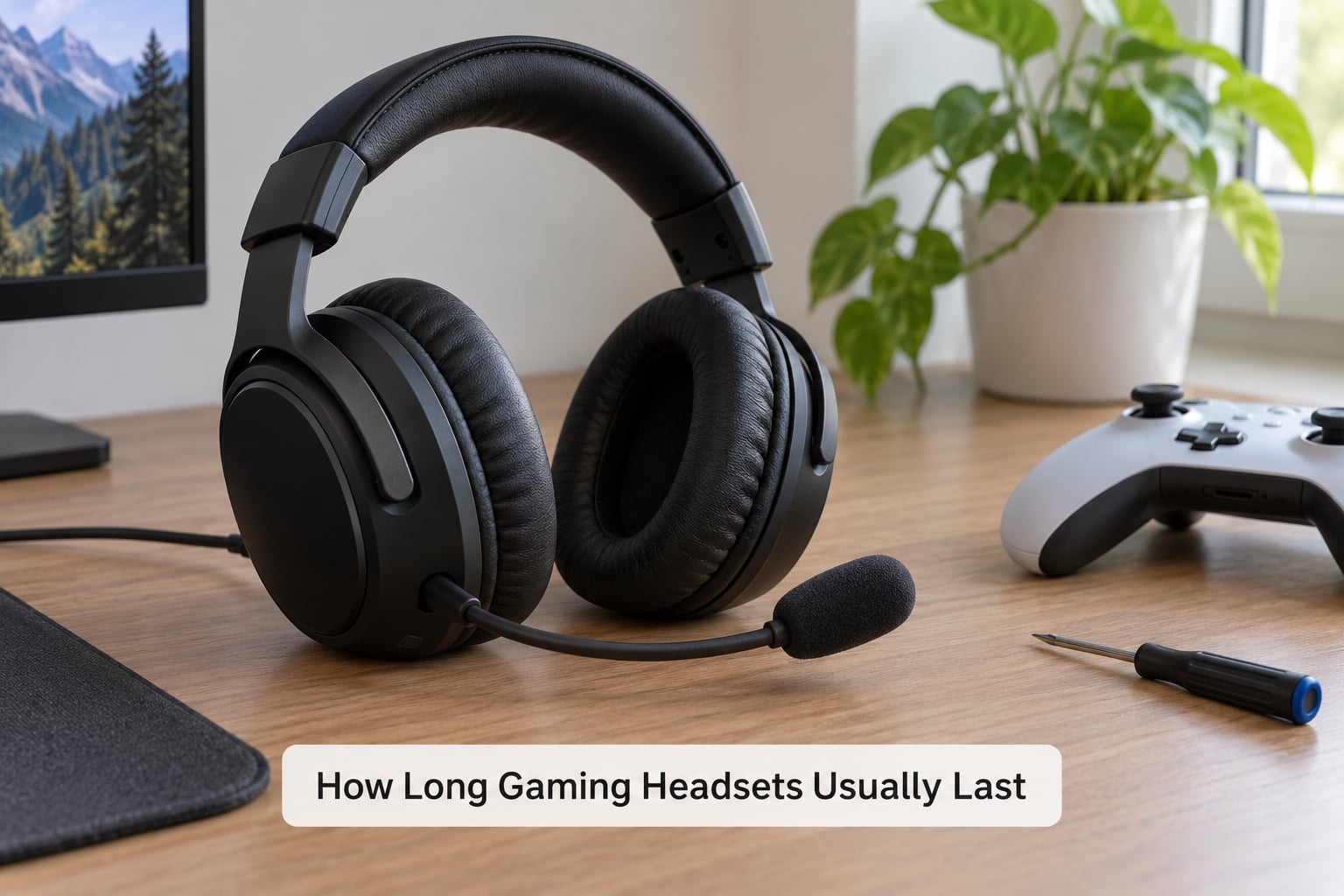
Here is the short version: budget headsets worn daily tend to give out in 12 to 18 months, midrange and premium models worn daily usually reach 2 to 4 years, and lightly used headsets can run 5 years or more. Wired headsets with no battery tend to outlive wireless ones by a wide margin.
The pattern shows up in owner reports. One poster on r/HeadphoneAdvice listed six headsets that failed within about four years, including a pair of Audeze Mobius, a Sennheiser GSP670, a Corsair Virtuoso, a SteelSeries Arctis Pro Wireless and a Logitech G903. All of them were worn six to seven hours a day, and the failures were snapped yokes, dead internal batteries and shredded ear cushions rather than anything electronic.
That user also concluded that spending more money did not fix the problem. Expensive models broke at a similar rate to cheap ones, which is the part most durability marketing leaves out.
| Usage level | Hours worn per day | Expected lifespan | What usually fails first |
|---|---|---|---|
| Casual | 1 to 3 hours, a few days a week | 4 to 6 years | Foam compression in the ear cushions |
| Regular | 2 to 4 hours, most days | 3 to 5 years | Ear cushion covering, then the yoke |
| Daily | 6 to 8 hours | 2 to 3 years | Hinge micro-play, cable strain, battery |
| Competitive | 10 hours or more, including tournaments | 12 to 24 months | Yoke snapping, battery swelling |
| Wired only | Any | 5 to 10 years with part swaps | Cable and connector, which are replaceable |
One more factor sits outside the headset itself: comfort. Several regulars in gaming communities describe replacing a headset because the headband lost tension or the foam flattened, long before anything broke. Comfort-driven replacement is real and it happens on its own schedule.
What Determines a Gaming Headset’s Lifespan?
Hours of wear per day decide the calendar lifespan
This is the variable nobody sells on, and it is the one that matters most. A headset worn two hours a day gets roughly 730 hours of use a year. One worn eight hours a day gets close to 2,900. That is four times the mechanical cycling of the headband joint, the swivel and the cushions.
Worked example: the same midrange headset used four hours a day across a 250-day year survives roughly three years before the yoke develops play. Bump that to eight hours a day and you have doubled the wear on the same calendar timeline, so you are looking at about 18 months.
The rest of the variables, ranked by how much they matter
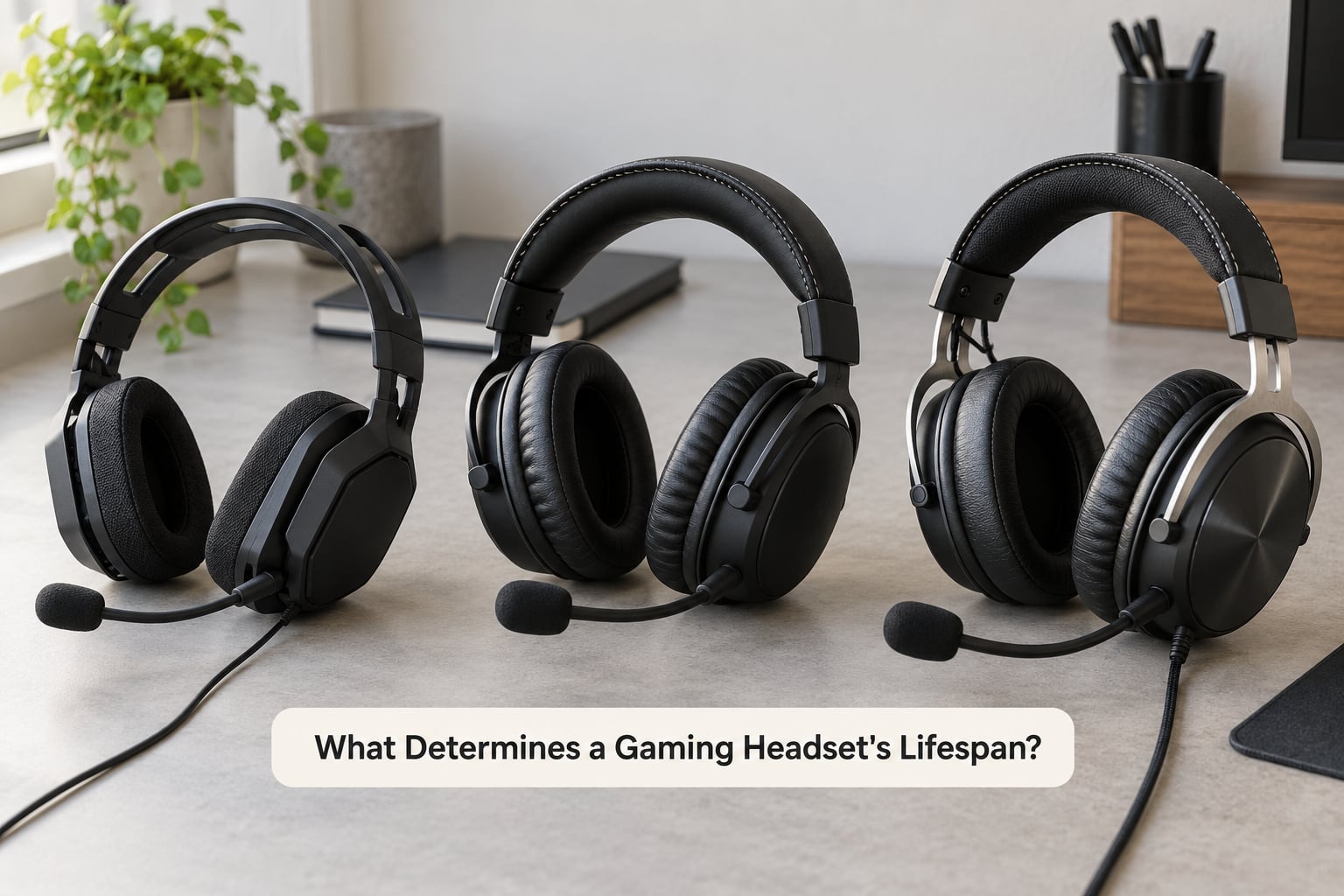
Joint and load path design. Buyers focus on material names, but what kills headsets is how the headband transfers load into the ear cups. A spring-steel headband core with plastic or aluminum forks spreads force smoothly. A thin plastic band with a molded hinge concentrates it into a small stress point that eventually cracks.
Cushion and earcup materials. Synthetic leather, often called pleather, is comfortable at first and then flakes as the coating breaks down under heat and skin oils. Fabric or knit pads last longer but collect sweat, so they smell sooner. Neither is wrong; they just fail differently.
Cable design. Braided cables resist abrasion better than flat ones, but a fixed cable with a cheap strain relief at the connector will break there regardless. A detachable cable changes this failure into a 10-minute fix.
Humidity and heat. Heat breaks down synthetic leather and softens the glue holding cushions to their mounts. Damp rooms accelerate foam compression. Keep the headset away from a hot car dashboard in summer.
Storage. Folding a headset at the hinge and leaving it there all week puts constant stress on the exact joint that already fails most often. Storing it unfolded, or on a stand, is better.
Microphone use. A boom mic that gets yanked off a connector daily wears the socket. Detachable or side-mounted mics avoid this entirely.
| Build tier | Typical materials | Daily-use lifespan | Weakest point |
|---|---|---|---|
| Budget | All-plastic band, fixed cable, glued cushions | 12 to 18 months | Molded hinge and non-replaceable cushions |
| Midrange | Steel-reinforced band, detachable cable, replaceable pads | 2 to 4 years | Battery, then the fork at the joint |
| Premium | Metal-reinforced frame, serviceable parts, spare parts program | 4 to 6 years | Usually nothing structural; comfort comes first |
| Serviceable wired | Full metal frame, sockets for pads, cable and mic | 5 to 10 years | Connector wear, which is cheap to fix |
Price alone is a weak predictor. A poster in a Blizzard forum thread described a year of daily 4 to 12 hour wear on a cheap headset with no visible wear at all. Meanwhile the r/HeadphoneAdvice owner saw premium models fail no later than budget ones. Build design and hours worn beat the price tag every time.
Common Reasons Gaming Headsets Stop Working
Ranked by how often each one is the thing that ends the headset’s life.
- Worn ear cushions. Synthetic leather cracks, flakes and eventually tears at the stitch line. Foam underneath compresses and stops sealing, so sound gets muffled and bass thins out. This is the cheapest failure to fix: pads for most models cost very little and clip or screw on. Swapping them regularly can add years.
- Loose yoke or hinge. Small movement, called micro-play, at the headband-to-earcup joint is the early warning. It gets worse until the fork snaps, often while lifting the headset off with one hand. Plastic yokes are brittle; metal forks survive much longer. Once it snaps, most headsets are finished because the part is rarely sold alone.
- Cracked headband core. A plastic band stretched to fit a larger head eventually splits across the top. Metal cores resist this much better. Same outcome as a broken yoke: usually no replacement part, so the headset goes.
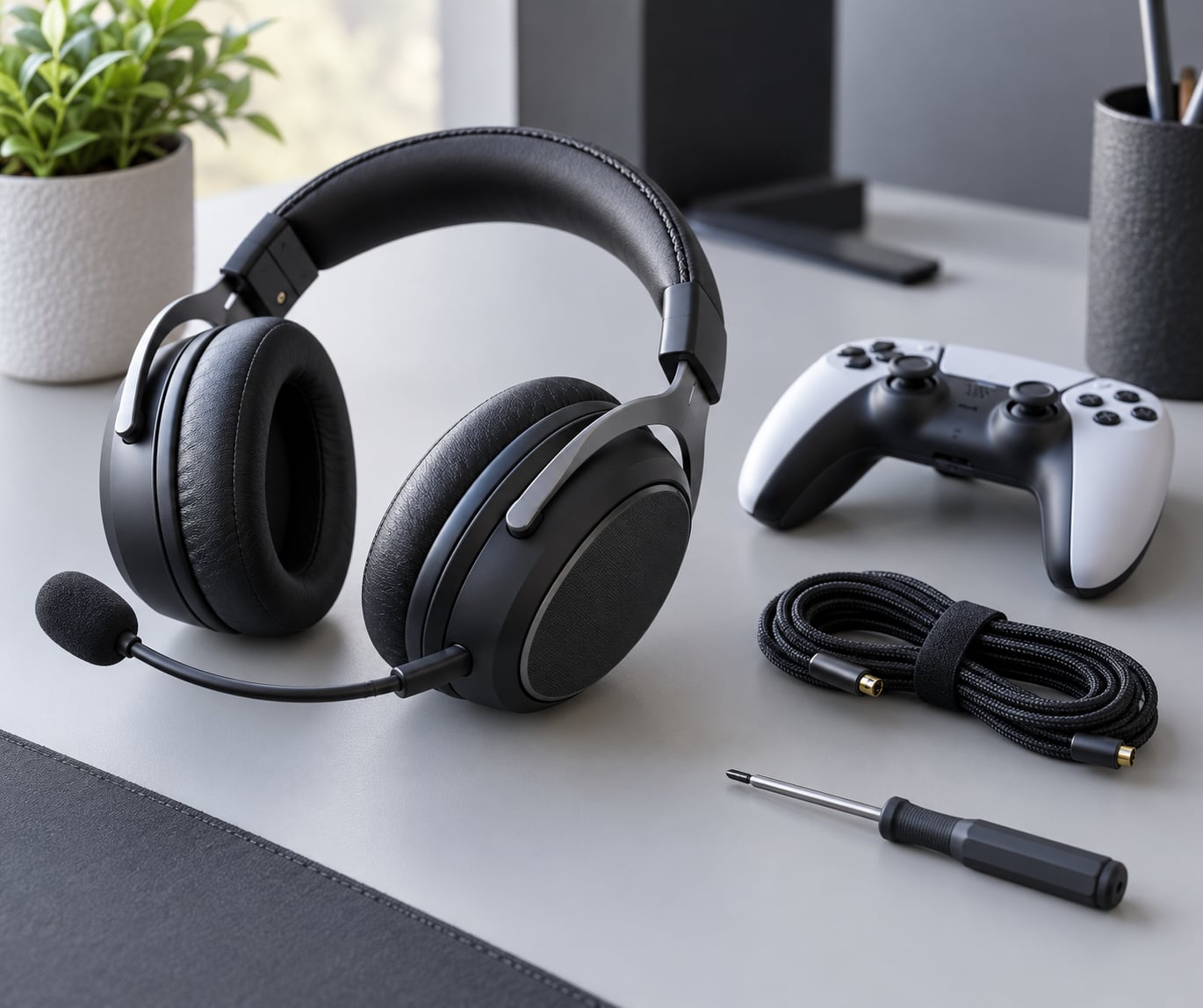
- Cable damage. Shoulder rub during long sessions is the single most cited failure trigger in forum threads. The wire breaks inside the jacket near the strain relief and you get one-sided audio or intermittent cutouts. With a detachable cable this is a 10-minute swap for very little. With a fixed cable it ends the headset.
- Driver imbalance or a dead cup. One ear cup going silent with no obvious cause is usually a driver failure, a broken solder joint, or a driver that has come loose inside the cup. Some wireless headsets report this when their internal battery swells and presses against internal components. Repair depends entirely on parts availability, and it is often poor.
- Battery deterioration. Wireless headsets carry a lithium-ion cell that loses roughly 10 to 20 percent of its capacity after one to two years, and holds around 80 percent after 300 to 500 charge cycles. Once the cell dies or swells, some models stop working entirely, even plugged in with a cable. A hot-swappable battery design makes this a non-event; a sealed one makes it the end of the headset’s life.
- Microphone failure. A dead boom mic or a permanently muted chat is annoying but rarely fatal, because you can often keep using the headset wired or swap the mic.
Not every symptom is hardware. White noise, static and sudden muting have been traced to software in iCUE, not to failing hardware. Before condemning a headset, reset it, uninstall the software and test it on a second device.
How Usage Affects Headset Longevity
Light use. A couple of hours a few times a week is the gentlest pattern on the joint and on foam. Headsets in this group regularly hit five years or more, and some owners report one headset still going after four years of five-day-a-week wear.
Regular gaming. Two to four hours a day is the most common pattern, and it lands most headsets in the three-to-five-year band. Comfort starts degrading before anything breaks, so pads are usually the first thing you change.
Competitive daily play. Six to ten hours a day, plus tournaments where the headset gets shoved into a bag and carried across a venue. Expect 12 to 24 months. Corded headsets fare worse here unless the cable is detachable, because that shoulder rub gets thousands more cycles a year.
Travel-heavy use. If you fly to events, the folding mechanism and the hinge take an extra beating that desk use never does. Foldable designs are convenient but concentrate stress at the fold. A hard case and a headset with a reinforced frame are worth more to a travelling player than any ear pad upgrade.
Three adjustments help immediately. Take the headset off with both hands instead of one, keep your volume below roughly 80 percent, and keep it out of hot cars and humid closets. None of these are exciting, and all three slow the wear.
How to Extend the Life of Your Gaming Headset
Eight habits, in rough order of how much difference they make.
- Lift it off with both hands. The single biggest cause of yoke failure is one-handed removal. Grip the headband and the ear cup, then lift.
- Coil cables loosely. Never wrap a cable tight around the headset or bend it sharply at the connector. A loose loop keeps the strain relief from carrying the whole load.
- Keep the volume moderate. Driving ear cups hard at high volume for hours accelerates foam compression and driver fatigue. Below about 80 percent costs you nothing on most games.
- Replace the ear pads before everything else. Fresh pads restore seal and sound and cost very little. It is the closest thing to a headset reset available.
- Clean with a dry cloth only. Dampen a cloth lightly for the headband, never for the drivers. No alcohol, no solvent, no spraying anything directly onto the headset.
- Store it unfolded. A stand or a hook keeps constant pressure off the hinge. A closed cabinet with the headset folded is the worst option.
- Charge partway, and charge it off the headset. Leaving a wireless headset permanently at 100 percent keeps the cell under stress. Do not charge it while it is hot after a long session.
- Check the hinge for play every few months. Gently twist each ear cup. Any movement you did not notice before means the joint is on its way out, and you have time to plan a replacement.
What to avoid: liquids near the cups, sleeping while wearing it, twisting the mic boom into a knot around the cable, and trying to open the ear cup housing to reach the driver. Those are the habits that turn a repairable problem into a write-off.
Repair or Replace the Headset?
Work down this list and you will usually get a clear answer.
- Cushions are cracked or flattened, everything else is fine. Replace the pads. Nearly every brand sells them, most designs attach with a simple friction fit or a screw, and it costs a fraction of a new headset.
- The cable is damaged and detachable. Repair. Buy the matching cable and you are done in minutes.
- The cable is damaged and fixed. Replacing the whole headset is usually the honest answer, unless you are comfortable opening it and soldering. That repair is out of scope for most people.
- The yoke or headband has cracked. Replace, unless the manufacturer sells the part. High-end brands with spare parts programs are the exception here, and it is worth checking before you buy.
- The battery no longer holds a charge. Replace only if the battery is hot-swappable or user-replaceable. A sealed cell means a new headset, because the cell is what usually kills otherwise healthy wireless units.
- One cup is silent or the driver crackles. Try a cable swap and a second device first to rule out the connection. If the fault follows the headset, replacement is the usual outcome because drivers are rarely sold as spares.
- The headset works but you dread wearing it. Replace. Compressed foam and a loose headband make a perfectly working headset unusable, and there is no repair for a cushion that no longer seals.
Check the warranty before anything else. Most gaming headsets carry one to two years of coverage, and hinges are a manufacturing defect rather than wear. It costs one email to find out, and it is the cheapest possible route to a working headset.
A broader question worth asking: headphones plus a separate microphone often outlast a gaming headset, because a headphone cable is replaceable, headphone drivers last much longer than headset drivers, and you can replace each part independently. Forum regulars who burned through several short-lived headsets frequently land on that combination.
Frequently Asked Questions
How often should you replace a gaming headset?
Replace a gaming headset when it stops being usable, not simply because it is old. Most reach that point between two and four years of daily wear. Practical signals are a cracked or loose yoke, one dead ear cup, a battery that will not hold charge, cushions that no longer seal, or a headband that has lost its tension. If the frame and electronics still work and only the pads are worn, replacing the pads gives you more years at a fraction of the cost.
What is the lifespan of a gaming headset?
About 12 to 24 months for daily use, 3 to 5 years at moderate use, and 5 years or more for a wired headset worn a few hours a week. Hours worn per day is the dominant factor rather than price. A headset worn eight hours a day gets roughly four times the mechanical cycling of one worn two hours a day, so its joints, cushions and cables wear out much faster on the same calendar timeline.
Why is my gaming headset dying so fast?
Most often because of hours worn rather than hours charged. Daily wear cycles the headband joint, swivel and cushions far more than occasional play, and heat from long sessions breaks down synthetic leather and the glue holding pads on. Sleeping while wearing a headset, one-handed removal, and a fixed cable rubbing against your shoulder all shorten life sharply. Software faults are worth ruling out too, since white noise and sudden muting have been traced to iCUE rather than failing hardware.
Can headphones really last 20 years?
Yes, and the reason is serviceability rather than build strength alone. Over-ear headphones that accept replacement ear pads, standard detachable cables and a socketed headband can be rebuilt part by part indefinitely, so they can outlive several headsets. Gaming headsets rarely can, because yokes, drivers and batteries are usually sold only as sealed units. Track down models with published spare parts programs if long-term ownership matters to you.
How long does a wireless gaming headset battery last?
A single charge usually gives you several hours of play, and real-world runtime commonly lands 30 to 40 percent below the advertised figure because RGB lighting, high volume and the 2.4GHz connection all draw extra power. Over the headset’s life, the lithium-ion cell typically loses 10 to 20 percent of capacity in the first year or two and holds roughly 80 percent after 300 to 500 charge cycles. A user-replaceable or hot-swappable battery makes this a non-issue.
Which gaming headsets are the most durable?
The ones designed around serviceability: a steel or metal-reinforced headband core, metal or well-braced forks at the ear cups, detachable braided cable, replaceable ear pads, a detachable or side-mounted microphone, and either a user-replaceable battery or no battery at all. Members of the gaming communities tend to be sceptical of material marketing and care far more about joint design, load path and whether spare parts exist years after launch.
Conclusion
Plan on 12 to 24 months for a headset worn every day, three to five years at moderate use, and considerably longer for a wired model with replaceable parts. Heavy daily wear is what shortens it, and paying more does not reliably prevent that.
Start by finding the weakest part. If the cushions are worn but everything works, swap the pads and you probably have another year in it. If the joint has play, the cell is swollen or a cup is dead, weigh that against the cost of a replacement before you commit, and check the warranty first. Everything else on the list is habit: two hands to lift, loose cable loops, moderate volume, and a dry cloth.