To beat a game at level one, you finish the challenge without letting your character gain levels — no XP, no stat upgrades, usually no gear beyond the starting kit — and win on timing, positioning and routing alone. If you are wondering how to beat a game at level one, the honest version of that answer is that the fight is rarely about your character being too weak.
Two very different people search this phrase, and the advice splits with them. One is an experienced player testing a challenge run, where the fun is the self-imposed limit. The other is a beginner genuinely stuck on the first level of a new game, where the first level only feels impossible because nobody has explained what it wants yet. Both get the same eight steps below, but read step 6 twice if you’re the second kind of player.
Table of Contents
- What You Need
- Step-by-Step
- 1. Define How to Beat a Game at Level One
- 2. Learn the Core Controls
- 3. Read the Objective and Watch the Environment
- 4. Master One Mechanic at a Time
- 5. Choose an Efficient Route
- 6. Use Combat, Items, and Resources Deliberately
- 7. Treat Failure as Practice
- 8. Confirm the Completion Requirement
- Common Mistakes
- Assuming level one is a difficulty problem
- Fighting every enemy on sight
- Panicking instead of retreating
- Changing five things between attempts
- Opening a full walkthrough on a first playthrough
- Refusing every assist option
- Frequently Asked Questions
- How do I get good at a game?
- What difficulty should I play a new game on for a first playthrough?
- Is it possible to beat a game at level one?
- What is the 40-second rule of gaming?
- Is using a walkthrough cheating?
- When should I restart a level or walk away from a game?
What You Need
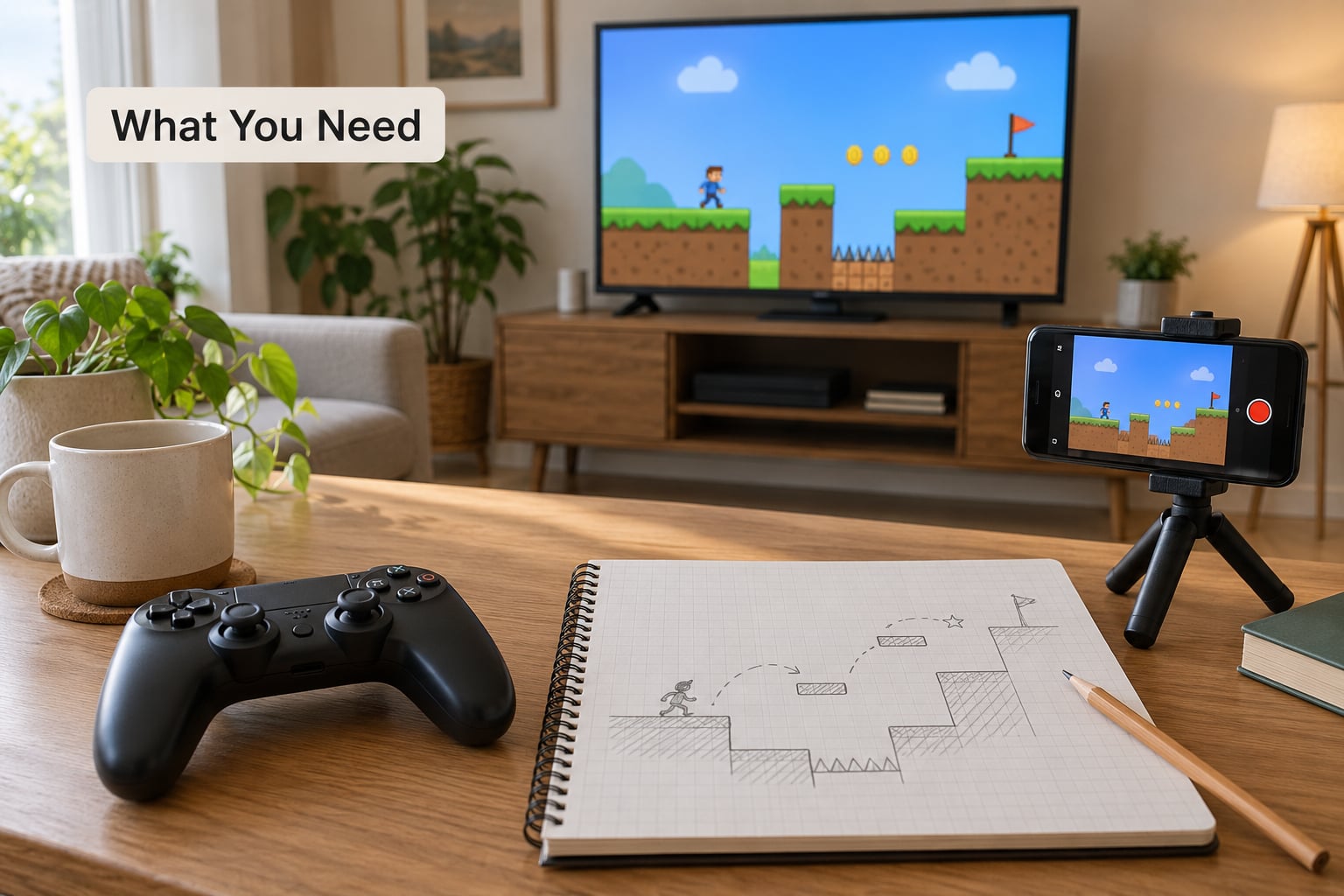
Most of the pain at level one is setup, not skill. Ten minutes of preparation before the first objective saves an hour of dying to something avoidable.
- The right version and difficulty of the game. Check whether you can change difficulty at all before you start, and whether it can only be lowered after a death. Several games lock it once a run begins.
- Controls you can trust. If dodging, aiming or sprint feels wrong on your pad, remap it in the first five minutes. Muscle memory built on bad keybinds is the enemy of muscle memory.
- A checkpoint you can return to. A save point, a reload from the last room, or a roguelike run restart. If the game autosaves constantly, know where.
- Optional beginner settings. Assist modes, aim assist, lock-on targeting, damage reduction, difficulty presets and toggleable subtitles change a first level far more than most players expect.
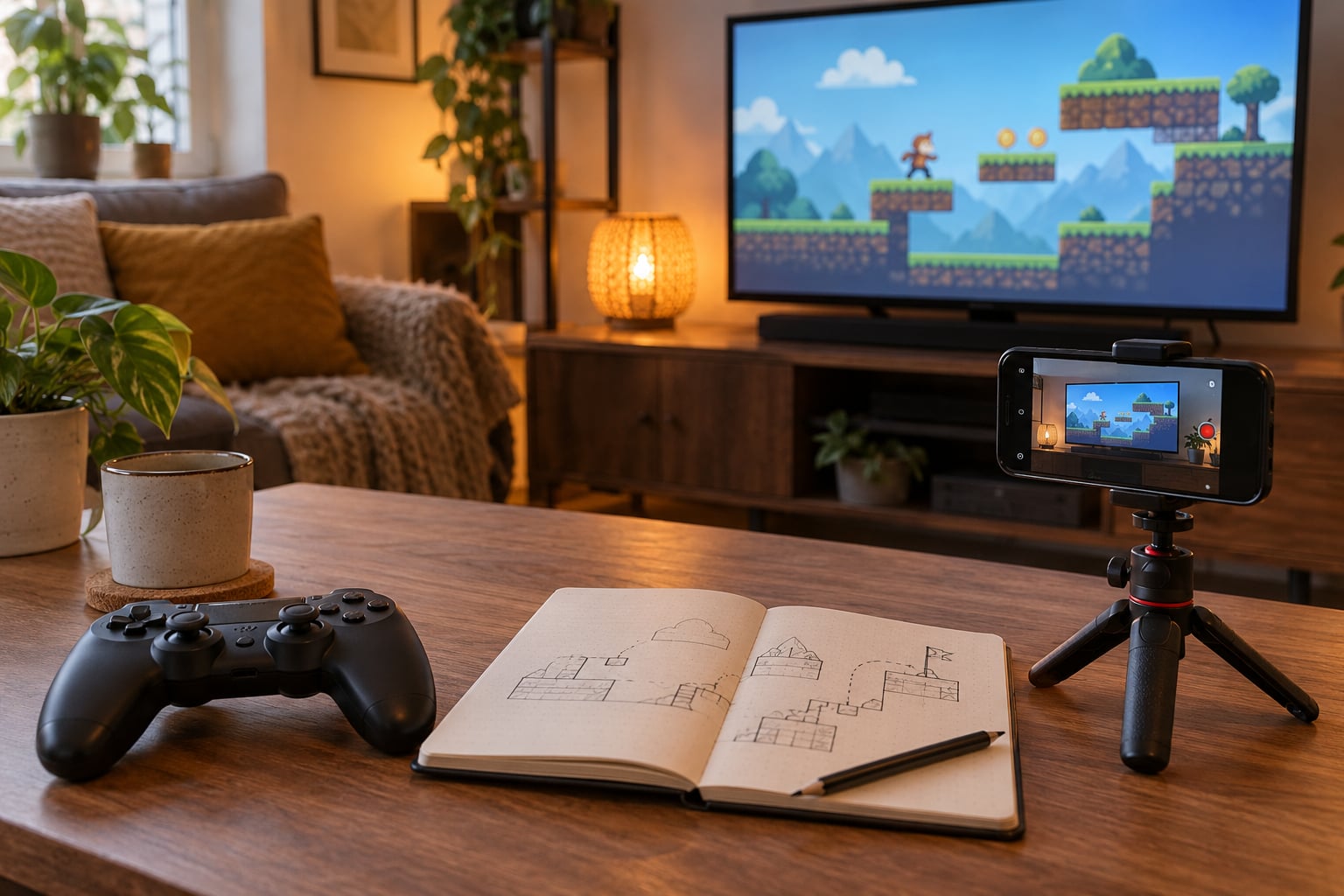
- A way to record or review rough attempts. A phone recording of one attempt beats twenty hazy recollections of it.
The recording step is the one people skip and later wish they had. Deaths at level one are almost always about one specific enemy doing one specific thing, and you cannot see that in real time. You can on video, at quarter speed.
Step-by-Step
Here is the repeatable process. It works for a platformer, a souls-like, a turn-based RPG and a bullet-hell alike, because underneath the art the structure is the same: read the goal, learn the rules, meet the requirement.
1. Define How to Beat a Game at Level One
“Level one” means at least three different things, and mixing them up sends people down the wrong path before the game has even started. In an RPG it is a stat level. In a 2D platformer it is area 1-1, the first screen-full of platforming. In a roguelike it is stage one of a run. In a fighter it is round one. In a challenge run it is a rule you set: no XP, no gear, no fast travel.
Whichever one applies, write the finish line down before you press start. Beat the boss. Reach the exit door. Collect three keys. Survive ninety seconds. The sentence matters because half of “I’m stuck” is really “I never worked out what done looks like,” and no amount of practice fixes a goal you have not defined.
2. Learn the Core Controls
Before the main challenge, find a safe area with nothing attacking you and test every control: movement, light attack, heavy attack, aim, dodge or roll, block, interact, pause, map, and restart. Ten repetitions each is plenty. Include the analog or trigger pulls if the game has them, and turn off camera shake if it is making you misjudge distance.
You will know it worked when you can back up to a wall without overshooting it, and you can hit dodge without looking down at the pad. That second one sounds trivial, but glancing at a controller mid-fight is the single most common reason a new player dies to the same attack four times in a row.
3. Read the Objective and Watch the Environment
Stop and scan before you move. Where is the objective marker? Which enemies are between you and the door? What is that pit, that spike strip, that gap in the railing? Collectibles are not the objective and picking them up at the wrong moment can trigger a fight you did not need.
Most early levels are built as a short sequence of rooms, and the intended route is usually the wide, obvious corridor. Test your read with one sentence: if you cannot describe what happens next without guessing, you are exploring rather than progressing. Exploration is fine. Just know which one you are doing.
4. Master One Mechanic at a Time
Every game is a bundle of systems, and trying to learn them all at once is why level one feels unfair. Split them into movement, timing, resource management, puzzle inputs and enemy patterns, then pick the single one that is costing you deaths. Spend ten minutes on that one alone.
For most players that mechanic is the punish window: the short recovery period after an enemy finishes an attack, when it cannot block or counter. Stand just outside their attack range, let the telegraph play out, and hit the recovery. When you can land the same attack three times in a row without taking damage, you have the mechanic and you can move on to the next one.
5. Choose an Efficient Route
Compare your available paths before committing to one. Which route reaches the next objective soonest? Which enemies are optional? Are there shortcuts, ledges, breakable walls or locked rooms you can skip for now? In most games the critical path and the interesting path are different, and the interesting one can wait until you know the game.
This is also where challenge runs live. If you are trying to beat a game at level 1, optional fights are not optional — they are experience you have promised not to earn. Route around them, skip the pickups that hand out XP, and remember that a fight you cannot win in two attempts is a fight you did not need to have.
6. Use Combat, Items, and Resources Deliberately
Learn what each consumable actually does and whether effects stack. A healing item that restores a flat amount is wasted at low hit points if a percentage-based one exists. Ammunition, throwables and puzzle items are usually finite and rarely replenished before the next shop, so spending one to solve a normal fight is a quiet downgrade to a later one.
Attack during recovery, not during windup. Use the room: pillars, water, cliffs, narrow doorways and ledges all change the odds in most action games, and enemies with hitboxes are easier to handle when they are cornered. When a fight is going badly, the correct move is frequently to leave, heal, and come back through a door you already unlocked. If you are simply stuck on the opening level of a new game, this is the step that will unstick you fastest.
7. Treat Failure as Practice
Every death has a cause you can name: a control mistake, a misunderstanding about the rules, a missed objective, poor timing, or a strategy that does not work. Write it down after each attempt. Then change exactly one thing and go again.
Change one thing, not five, because five changes means you cannot tell which one helped. And if the twentieth attempt ends exactly like the nineteenth, you are not practising — you are looping. In that case the honest move is to stop, watch one video of the fight, or walk away for a day. The most common way a first boss ruins a first playthrough is not the boss, it is dying to the same boss thirty times and quitting the whole game over it.
8. Confirm the Completion Requirement
Finishing the fight is not always the same as finishing the level. Some levels need every key collected, a score threshold cleared, a specific dialogue choice made, or an optional encounter survived to the end. Some games gate an achievement or trophy on stricter conditions than the level itself, such as taking no damage.
Check the quest log, the objectives list and the end-of-level results screen before you move on. How to beat a game at level one is only half the question if you then find out the game wanted a collectible you walked past. Confirm it, screenshot it if you care about the record, then let yourself breathe.
Common Mistakes
These are the errors that account for most stuck players, and nearly all of them are decisions rather than ability. The diagnosis matters more than the fix, because the same symptom has different causes depending on the game.
Assuming level one is a difficulty problem
You grind, or you blame your reflexes, and neither touches the real issue. The fix is to write down your death cause, because it is usually information you never collected.
Fighting every enemy on sight
It costs you experience you did not need and damage you cannot spare. Identify the objective first, then walk past any fight that is not on the way.
Panicking instead of retreating
Panicking puts your deaths inside the enemy’s active frames, exactly where you are weakest. Back out of range during a telegraph, heal, then re-enter on their recovery.
Changing five things between attempts
Five changes means there is no way to tell what worked, so nothing gets learned. Make one change per attempt and write it down before you try again.
Opening a full walkthrough on a first playthrough
You finish the game having learned nothing transferable. Look up boss strategies, not solutions — walkthroughs for the room you are in, nothing further.
Refusing every assist option
That costs hours on a setting which was never the challenge. If the goal is the story or the ending, take the assist. If the goal is the run, keep the limits you set.
Two habits keep the rest working. Save or reload to a known checkpoint before every serious attempt rather than after one, so a bad run costs you two minutes instead of twenty. And when a level stops being fun, stop — players on forums describing Elden Ring and Oblivion level-1 attempts almost all name the same turning point, and it is almost never the difficulty. It is the run where they stopped trying to win and started watching what the game was doing.
Frequently Asked Questions
How do I get good at a game?
You get good at a game by turning deaths into named information. After each attempt, write one sentence about why you died, then change one thing and retry. Most improvement comes from learning enemy patterns, understanding your own recovery windows and routing past fights you do not need. Grinding improves numbers, not understanding, and a game only rewards understanding once you can repeat a fight without thinking about it.
What difficulty should I play a new game on for a first playthrough?
Pick the setting that lets you finish, then raise it on a replay. If a game has an assist mode, use it on a first playthrough unless the combat is the entire reason you bought it. Several titles also let you drop difficulty after a death, which turns a hard opening into a recoverable one without starting over. For a challenge run the rules are different, and you set the limit yourself.
Is it possible to beat a game at level one?
Yes, and it has been done repeatedly in the harder cases. Players on r/Eldenring and r/oblivion post about finishing at starting level, Skyrim has a well-known zero-equipment run, and Baldur’s Gate 3 has been completed at level 1 through narrative and stat manipulation rather than combat. It is not an expert-only club, but it is far slower than a normal run and it demands routing discipline more than raw reflexes.
What is the 40-second rule of gaming?
It is a patience heuristic, not a mechanic. If something has gone wrong, wait roughly 40 seconds before acting, and you often notice the enemy telegraph, the puzzle sequence or the resource you wasted. The longer form of the idea shows up constantly in advice about hard games: never rush, watch the pattern, let the game show you the timing. The habit is useful even if you have never seen the number before.
Is using a walkthrough cheating?
It depends on the goal, and you are the one who defines it. For a first playthrough, a full solution guide removes the discovery the game exists to deliver. A boss strategy or a hint for the one puzzle blocking you is usually a fair trade. In a level-1 challenge run, an external guide usually breaks the rules you set, so treat it as a spoiler and decide before you open it, not after.
When should I restart a level or walk away from a game?
Restart the level when the same attempt ends the same way three or four times in a row, since that pattern means your approach is wrong rather than your execution. Walk away from the game when you have stopped learning anything from the deaths, usually around the thirtieth attempt at one enemy. A break of a day costs nothing. Quitting a game you were enjoying over one level is the outcome worth avoiding.
If you do one thing tonight, make it the ten-minute control test and the one-sentence definition of what “done” looks like. Together they solve most of what people call being stuck at level one, and both take less time than the tenth death you were about to have anyway.
Then run the level with a pen next to the pad. One line per attempt, one change at a time, and the level falls quickly — usually faster than when the difficulty was turned down, because now you are actually improving at the game instead of being carried by it.